
Join Low Voltage Nation — Find project opportunities and showcase your company to thousands of industry professionals
A new Denton filing outlines a $110 million data-hall fit-out and names Gensler. Explore the evidence, campus context and prospective low-voltage work.
Core Scientific has registered a $110 million Building A fit-out at its Denton, Texas, campus. The filing gives contractors a specific building, owner, designer and scheduled work window to investigate. The project would turn existing interior space into a data hall, adding another construction signal at a campus already associated with AI computing.
The Texas Department of Licensing and Regulation registration, dated August 19, 2026, identifies 27,678 square feet at 8171 Jim Christal Road. Core Scientific Inc. is the owner and Gensler is the design firm. The filed schedule runs September 1, 2026, through May 31, 2027. A municipal permit, actual Building A start and specialty contract awards remain unverified as of September 8.
What the Building A filing establishes
| Item | Filed detail | Qualification |
|---|---|---|
| Scope | Existing-building data-hall fit-out | Interior renovation |
| Location | Denton, Texas | 8171 Jim Christal Road |
| Estimated cost | $110 million | Registration estimate |
| Area | 27,678 square feet | Building A work area |
| Schedule | September 2026–May 2027 | Filed dates |
| Capacity | Undisclosed | Building-specific MW unknown |
The underlying description covers a single-story Type IIB structure with business and storage occupancies and sprinkler protection. Its current TDLR status is registered. That is the documented milestone; the elapsed scheduled start date alone does not establish mobilization. The registration also leaves the tenant unassigned.
For a prospective bidder, the useful first request is a building-specific drawing package and procurement contact. Those would clarify the renovation boundary, interfaces with existing campus systems and who controls each installation package. An address can identify the campus while leaving the precise work area and access route unresolved.
The campus context behind the project
Core Scientific’s Denton campus page gives the same street address and markets 394 MW of total power capacity, a 78-acre footprint and 423,831 square feet. It describes high-density infrastructure for AI and enterprise workloads. Those campus figures establish the setting for Building A; the filing does not assign a share of that power to the renovation.
Core Scientific’s February 2025 Denton expansion disclosure describes a 70 MW agreement with CoreWeave that brought the announced campus critical IT load above 260 MW. It also describes $1.2 billion of contracted revenue over the contract term and a $104 million Core Scientific commitment for powered core and shell, with additional expansion capital assigned to CoreWeave.
The relationship between that earlier expansion and this later Building A registration has not been publicly reconciled in the sources reviewed. Campus total power, contracted critical IT capacity and the renovation’s incremental capacity use different measurements. Contractors should ask which electrical allocation and customer delivery milestone govern the particular package they are evaluating.
The city relationship also predates this filing. In its November 2024 lease-amendment announcement, Core Scientific reported Denton approvals supporting expanded land access and 394 MW of power. The release’s projected $6.1 billion campus real-property investment has a different scope and time horizon from the Building A estimate. The announcement does not identify a new Building A feeder, substation package or energization date.
Who is named, and which appointments remain open questions
| Organization | Sourced role | Evidence boundary |
|---|---|---|
| Core Scientific | Owner and campus operator | Owner named in filing |
| Gensler | Building A design firm | Trade packages unverified |
| CoreWeave | Denton campus customer | Building A tenant unassigned |
| City of Denton | Campus land and power counterparty | Building allocation unknown |
| GC and specialty contractors | Unverified | No Building A award established |
Gensler’s critical-facilities practice provides context for the designer’s experience; the state record supplies the Building A assignment. Portfolio images on the designer’s website show other work and should be understood as company context. The available evidence does not establish a Building A general contractor, construction manager, electrical contractor, security integrator, fiber installer or commissioning firm.
That leaves a practical qualification task for interested firms: obtain the authorized purchasing route. A registered owner contact, a designer’s office and a campus customer can each answer different questions, but none automatically represents a subcontract tender desk. Ask who issues invitations, whether an incumbent contractor controls the work and whether vendor qualification is open.
Where prospective low-voltage work could emerge
The following scope analysis is an inference from the data-hall conversion and the operator’s campus descriptions. Building A quantities, specifications and bid packages are unknown. The operator identifies campus CCTV, badge access, perimeter controls and intrusion monitoring, which makes integration with existing security an especially useful design question.
| Work area | Prospective relevance | Question before pricing |
|---|---|---|
| Fiber and pathways | Data-hall connectivity | Routes, counts, acceptance plan? |
| Structured cabling | Facility and support networks | Installer and supply boundaries? |
| Access control and CCTV | Existing-campus integration | Platforms and approved integrator? |
| Fire-alarm interfaces | Life-safety coordination | Approved interface drawings? |
| Controls and monitoring | Equipment status and alarms | Points list and integration owner? |
| Testing and turnover | Documented acceptance | Witnessing and handover criteria? |
For fiber firms, a useful early review would cover entry locations, pathways, termination responsibility and the handoff between building infrastructure and customer equipment. The estimate could change materially depending on whether a package includes only installation or also material procurement, patching, testing and documentation. Campus size alone cannot resolve those boundaries.
Security firms should request the existing platform requirements, authorized integration process and operating-campus access rules. A new room or entrance could require coordination across readers, doors, cameras and network services, but the actual design must establish those needs. Existing systems can also create constraints around maintenance windows, account privileges and acceptance testing that should be settled before a bid is priced.
Controls and commissioning prospects depend on the responsibility matrix. An interested contractor should ask who supplies sensors, who connects equipment, who configures the monitoring platform and who witnesses functional tests. Fire interfaces need their own approved design and review path. Wireless coverage or DAS should remain conditional until the design team or applicable authority establishes a requirement.
LVN is leaving the low-voltage contract value undisclosed. A percentage of the total registered estimate would require assumptions about equipment ownership, exclusions, existing infrastructure and procurement structure. Actual drawings and a scope schedule would make an estimate useful to a contractor deciding whether to pursue the work.
Jobs, trades and preparation
No Building A construction-job count, permanent-job commitment, labor agreement or current vacancy was established by the reviewed sources. Core Scientific’s careers page and official openings page are starting points for a job search. Individual requisitions still need to identify location, employer, duties and status before they can be treated as a Denton hiring lead.
For technicians preparing for data-center work generally, the Fiber Optic Association’s workforce resources explain training and certification routes. Its technical reference guide covers installation and testing topics. Useful preparation includes connector inspection and cleaning, careful cable handling, test-result interpretation and traceable documentation. These are general development resources; Building A’s employer and project requirements remain to be confirmed.
A firm assembling a prospective team can also review its ability to produce labeling schedules, organized test files and complete handover records. Ask the buyer which formats and acceptance criteria it expects. Senior technicians may be especially useful in reviewing interfaces, identifying incomplete information and resolving discrepancies between drawings and field conditions.
OSHA Outreach Training offers general hazard-awareness education. OSHA distinguishes that program from training required by specific standards. Any employer evaluating Building A work should confirm task-specific preparation, site access rules and its own onboarding requirements. No particular course, credential or manufacturer certification has been verified as a Building A hiring condition.
How the financing headlines fit
The issuer’s $3.3 billion secured-notes disclosure describes a financing structure involving several sites and uses of proceeds, including debt refinancing and reserves. Denton appears in that broader structure. A Building A financing allocation or drawdown is not disclosed in the reviewed document.
Core Scientific’s second-quarter 2026 results provide additional company context, including $797.5 million in quarterly capital expenditures and 437 MW billing by mid-July. Those are companywide measures. They cannot establish completion, expenditure or delivered capacity for an August registration.
For a subcontractor, the more useful commercial evidence would be the contracting entity, payment terms, approved scope and delivery schedule. Public financing news can justify investigating an opportunity, while project documents determine whether a particular package fits the firm’s capacity and qualifications.
What would make the opportunity more actionable
- Confirm the work boundary: obtain the Building A permit and drawings, then map the filing to the campus’s building names.
- Confirm procurement: identify the GC or construction manager, package owners, qualification route and invitation dates.
- Confirm delivery dependencies: request the electrical allocation, equipment handoffs, access windows and acceptance milestones.
- Confirm workforce demand: verify employer-issued requisitions and any published trade staffing requirements.
Building A is a specific construction lead within an established AI campus. The next useful evidence is the material that lets a contractor decide what it could actually deliver: a defined package, a responsible buyer and a credible schedule. Until those details are available, the fit-out belongs on a qualified watch list with its uncertainty visible.
Explore data-center opportunities with LVN Signal
LVN Signal brings construction opportunities and low-voltage context together so contractors can focus their research. Explore Core Scientific Denton and related projects, review the source evidence and identify the next qualification step for your team.
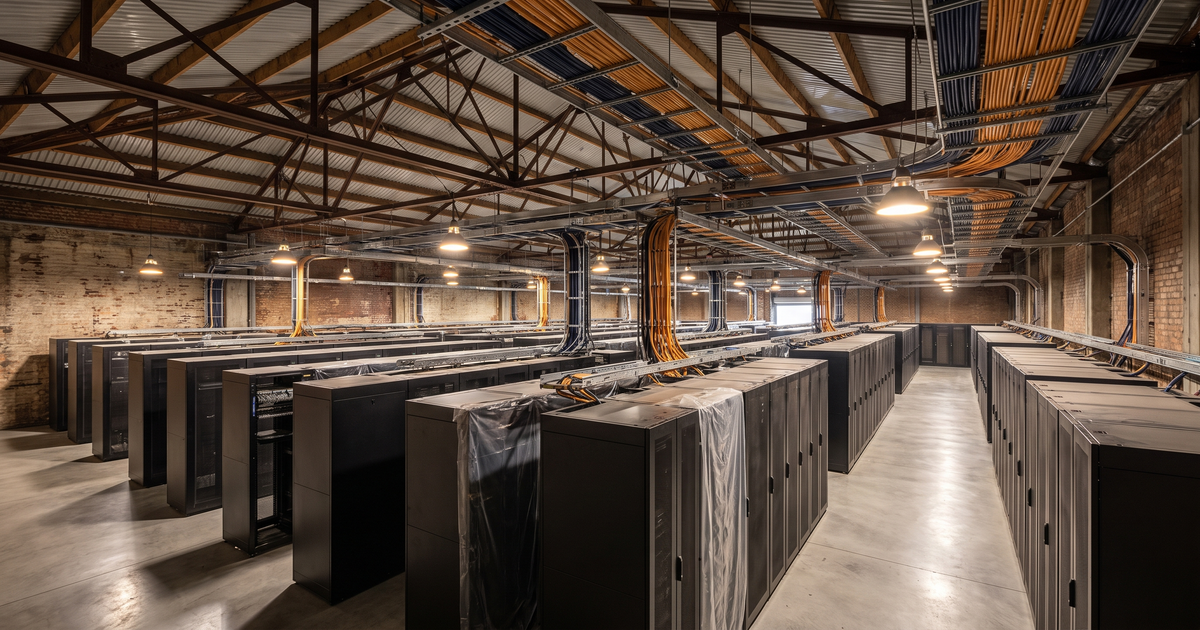
Reporting checked September 8, 2026. Featured and social images are AI-generated editorial illustrations; their appearance is conceptual.
Join 35,000+ Low Voltage Pros
Get weekly permit updates, tool deals, job opportunities, and industry news. No spam, unsubscribe anytime.