
Join Low Voltage Nation — Find project opportunities and showcase your company to thousands of industry professionals
CleanSpark’s 175 MW Sandersville AI campus has a Meta tenant and newly priced debt. Explore the construction evidence and prospective low-voltage work.
CleanSpark has priced $2.276 billion of project debt tied to its Sandersville, Georgia AI campus, adding a financing milestone to a development already reporting construction progress. The 175 MW project has a disclosed Meta connection and an initial delivery target in late 2027. For low-voltage contractors, the useful question is how that development schedule will translate into network, fiber, controls and commissioning work.
The September 18 issuer pricing announcement says closing is expected September 25, subject to conditions. As of September 20, that milestone remains ahead. General-contractor and specialty-trade appointments have not been established in the reviewed sources.
The Sandersville project at a glance
| Item | Reported position | Basis |
|---|---|---|
| Location | Sandersville, Georgia | New AI campus beside existing mining |
| Capacity | 175 MW critical IT | Contracted future capacity |
| Stage | Construction underway | Owner's September update |
| Tenant | Anviran, LLC | Meta subsidiary |
| First delivery | Q4 2027 target | Company forecast |
| Jobs and trade awards | Unverified | No project-specific counts or packages |
CleanSpark's September 8 operational update explicitly describes construction progress at Sandersville. That supports an underway classification, while leaving the exact start, percentage complete and current field activities unresolved. A developer's progress statement provides a different level of detail from permits, inspection records or a construction schedule.
The company's June-quarter Form 10-Q, Note 16 places the AI development on newly acquired adjacent land. It records a July 10 lease and concurrent construction agreement. Existing mining continues until lease commencement, when power is to move to the AI campus. This is a new construction effort alongside an operating industrial site. The reviewed material leaves the AI parcel's precise address and boundaries unresolved.
Three financial figures with different meanings
The newly priced notes have a 7.875% coupon, mature in 2031 and were priced at 98.5% of principal. Intended proceeds cover remaining buildout, reimbursement of prior equity contributions and debt-service reserves. Those uses make the debt principal an unsuitable shortcut for a construction-only budget. The September 17 proposed offering was $2.227 billion; the September 18 release supplies the subsequent priced terms.
Separately, CleanSpark's July lease announcement describes approximately $6.6 billion of expected revenue over the initial 20-year term. Extension options could lengthen that relationship. Revenue collected over years cannot be treated as an available construction package or equipment order.
The September investor presentation estimates development cost at approximately $11.9 million per IT MW. Its illustrative schedule assumes first-network-hall rent begins November 30, 2027 and construction completes in March 2028. These remain modeling assumptions. The deck's illustrative debt terms also predate the pricing release.
For a subcontractor, a useful budget starts with drawings, quantities, scope boundaries and a buyer. Applying a generic low-voltage percentage to either the lease revenue or debt amount would create an estimate with no defensible package basis. LVN therefore leaves the available low-voltage contract value open. Capacity is a scale indicator; procurement documents determine the addressable work.
Who is involved, and which construction roles remain open
The investor presentation identifies Anviran as a wholly owned Meta subsidiary and Meta as guarantor of rent and operating expenses. The financing release names the project borrowing and guarantee entities. Their disclosed roles are summarized below; financial relationships do not establish construction appointments.
| Organization | Disclosed role | Source |
|---|---|---|
| CleanSpark | Developer; completion guarantor | Pricing release |
| Anviran, LLC | Tenant | Investor deck |
| Meta Platforms | Tenant parent; rent guarantor | Investor deck |
| CSDC Finance I | Debt issuer | Pricing release |
| CSRE Properties Sandersville | Note guarantor | Pricing release |
| CSDC Holdings I | Issuer parent; equity pledgor | Pricing release |
The construction agreement establishes that a delivery arrangement exists. Publicly reviewed evidence does not identify its counterparty, the architect, engineering team, electrical contractor or cabling integrator. Assigning a familiar data-center contractor based on its work elsewhere would create a false lead. A firm researching this campus should seek a named project purchasing contact and verify the buyer's package before investing estimating time.
CleanSpark's August 6 results release says long-lead equipment was ordered and prepaid and the anticipated equity contribution funded. That is useful procurement context. It leaves supplier identities, equipment delivery status and installation responsibility unresolved. Owner-purchased equipment can still require installation and interface work, but those boundaries need confirmation before an estimator includes them.
Where low-voltage contractors should focus
The following is LVN's prospective scope analysis. It identifies questions raised by a new AI campus and a network-hall milestone. It does not establish available bids, installed systems, quantities or awarded contracts.
| Potential scope | Practical relevance | Evidence to obtain |
|---|---|---|
| Fiber and outside plant | Campus entrances and interconnections | Routes, demarcations, civil packages |
| Structured cabling | Facility and network-space links | Cable schedule and test specification |
| Access control and CCTV | Controlled access and monitoring | Security design and integrator scope |
| Fire-alarm interfaces | Life-safety coordination | Approved design and responsibilities |
| BMS and controls | Equipment monitoring and alarms | Point lists and integration boundaries |
| Testing and turnover | Documented operational acceptance | Acceptance plan and signoff owners |
Start with the network hall. A phased delivery plan creates a practical sequencing question: what must be connected, tested and accepted for the first usable space? Estimators should request the handover sequence alongside the final drawings. That helps distinguish early backbone work from later fit-out and exposes dependencies on power, cooling, carrier service and access to adjacent work areas.
Clarify the outside-plant boundary. A campus entrance can involve separate civil, electrical, carrier and communications responsibilities. Useful questions include who provides duct, who proves the pathway, who owns cable placement, and who restores disturbed areas. Route diversity should be supported by drawings. Assuming that two entrances provide independent service can leave an important design question unanswered.
Define test ownership before mobilization. A bid should identify required deliverables, file naming, equipment calibration records and the party accepting the results. Fiber cleaning, inspection, testing and labeling all belong in the labor plan. If an owner or integrator supplies preterminated assemblies, the installing contractor still needs an agreed inspection process and a clear boundary for troubleshooting.
Separate installation from integration. Pulling cable, configuring devices and proving an alarm sequence may sit in different contracts. Security and controls estimators should ask who supplies network addressing, software access and vendor support. For fire and life-safety interfaces, the approved design and responsible contractor must govern scope. A general list of expected systems cannot settle those obligations.
Price documentation as work. A turnover package can require marked drawings, labels, schedules, test exports, training records and resolved deficiencies. A contractor assessing the opportunity should ask for the acceptance checklist early and assign someone to maintain it during installation. Delaying that conversation until the physical work ends makes the final labor requirement difficult to estimate.
Check whether the package fits your crew. Before pursuing a large campus, a smaller contractor can ask whether procurement separates pathway, installation, testing and integration work. The answer determines which qualifications and staffing commitments matter. Request the expected shift pattern, access restrictions, supervision requirements and process for accepting completed areas. A narrowly defined package may be easier to evaluate than a broad invitation with unclear interfaces. Sandersville's actual packaging remains undisclosed, so this is a qualification method to apply when a legitimate solicitation appears.
Jobs, trades and skills: prepare against a real specification
No project-specific construction or permanent-employment count was verified. The reviewed announcements also do not establish current vacancies. A large campus can be relevant to several trades without providing enough evidence to announce a hiring wave. Applicants should look for an employer, work location and actual role description before treating a generic data-center opening as Sandersville work.
For technicians, the practical preparation list includes optical-fiber inspection and testing, structured-cabling installation, pathway coordination, grounding and bonding, labeling and clear records. Controls and security work add integration questions, while commissioning work adds acceptance documentation and coordination with other trades. These are suggested areas to assess against future project specifications, rather than a claim that every system has been procured.
General learning resources include the Fiber Optic Association's workforce resources, BICSI's training catalog and OSHA Outreach training. None is presented here as a Sandersville contract requirement. Employer onboarding, site access, lift training and the applicable job requirements still need to be established by the hiring or contracting organization.
The next evidence that would change the opportunity
Financing closure is the nearest announced milestone. After that, the most useful updates would identify delivery partners, permit scope, utility-service arrangements and actual construction progress. Package-level documents would clarify whether remaining opportunities sit with the developer, tenant, general contractor, electrical contractor or a specialist integrator.
The location also needs more precision for field planning. A Sandersville city reference is useful for regional discovery, but mobilization requires a verified parcel, access point and site instructions. Adjacent operating infrastructure makes boundaries and work sequencing useful questions to raise when a real procurement contact is established.
CleanSpark's separate Texas discussions and companywide power portfolio should be evaluated as their own developments. Sandersville's attraction is already specific: a named tenant relationship, a defined future IT-capacity commitment, reported construction and a financing process with a stated next date. Keeping each milestone attached to its source makes the project easier to assess as new evidence arrives.
Find the projects behind the headlines. Use LVN Signal to research construction projects, discover relevant organizations and follow the evidence that turns a regional development into a qualified contractor opportunity.
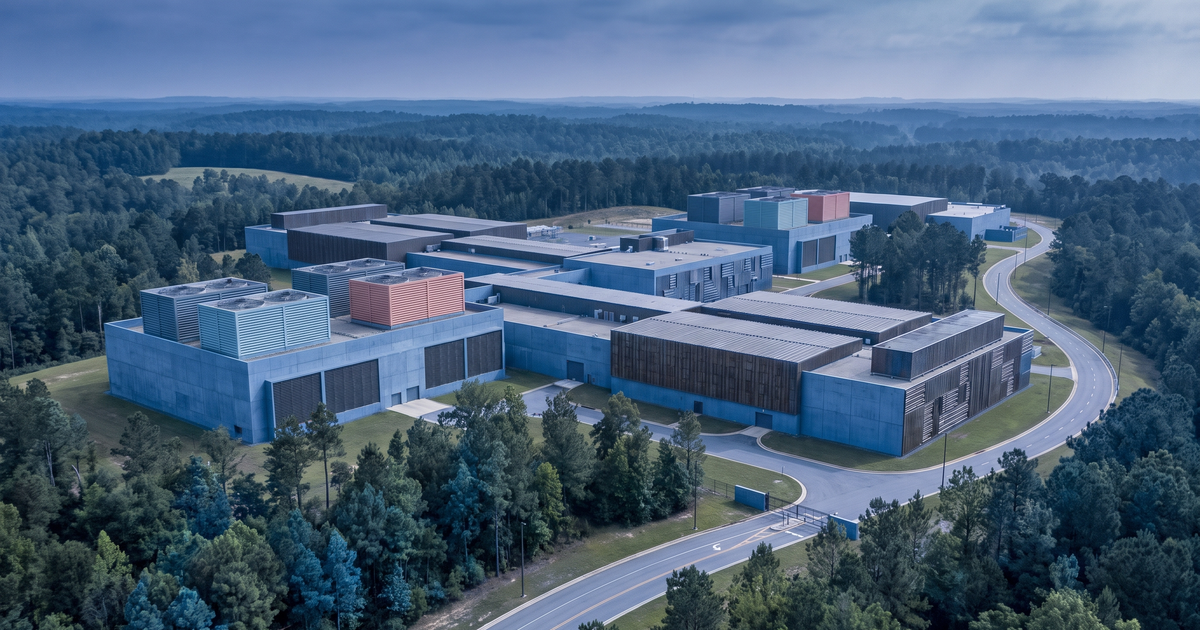
Reporting cutoff: September 20, 2026. Featured and social artwork are AI-generated concept illustrations; they do not depict a verified Sandersville site design.
Join 35,000+ Low Voltage Pros
Get weekly permit updates, tool deals, job opportunities, and industry news. No spam, unsubscribe anytime.