
Join Low Voltage Nation — Find project opportunities and showcase your company to thousands of industry professionals
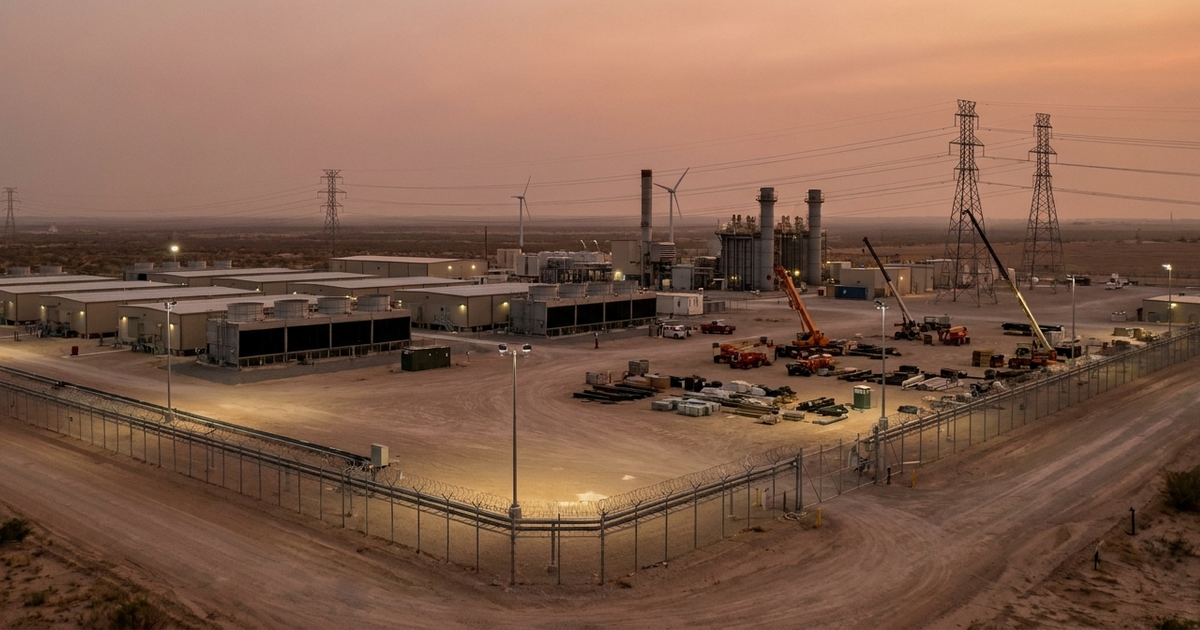
Project Kilby pairs a Microsoft-operated Pecos AI data-center campus with Chevron-backed dedicated power, creating a major West Texas low-voltage watch item.
Project Kilby is the kind of AI data-center signal that low-voltage contractors can miss if they only watch building permits. The visible construction path starts with power, air permits, tax-abatement records, and equipment vendors, but the downstream scope still points back to the systems LVN readers care about: fiber, OSP, structured cabling, access control, CCTV, fire alarm interfaces, controls, DAS, networking, grounding, documentation, and commissioning.
Chevron announced that Energy Forge One LLC, a Chevron subsidiary, signed a 20-year power purchase agreement with Microsoft for a co-located West Texas power facility serving a Microsoft-operated data center. An accessible BIC Magazine version of the announcement preserves the same core facts: the development is called Project Kilby, Chevron and Engine No. 1 are collaborating on it, Microsoft is the data-center power customer, and the power build is expected to reach roughly 2.67 GW through a phased modular approach.
This is not yet a trade-package award story. Reviewed public evidence does not name a GC, EPCM, electrical contractor, low-voltage contractor, fiber contractor, security integrator, fire alarm contractor, BAS/BMS controls integrator, DAS/networking integrator, or commissioning firm. That is exactly why it is worth tracking now. Once a project this large moves from power agreements and state permits into sitework, substations, data-hall packages, and tenant fit-out, the specialty signals can show up quickly and in different places.
| Item | Source-backed detail |
|---|---|
| Project | Project Kilby, a dedicated power and AI/data-center campus near Pecos / Reeves County, Texas. |
| Customer | Microsoft-operated data center served by a Chevron-backed power facility. |
| Power scale | Chevron says about 2.67 GW of phased dedicated capacity; DCD reports Microsoft described a 2 GW campus. |
| Public records | TCEQ lists Kilby Power Plant air-permit numbers 181895, PSDTX1684, and GHGPSDTX260. |
| Local value signal | Reeves County ESD notice describes a $6B Energy Forge One power-generation project. |
| Stage | Planned / pre-construction, with permitting and local incentive activity already visible. |
The power record is the clearest public trail. The TCEQ notice of application and preliminary decision identifies Energy Forge One LLC as the applicant and says the permit package would authorize construction of the Kilby Power Plant in Reeves County near Pecos. A separate TCEQ public-meeting notice keeps the same permit family visible in the state record. The Reeves County Emergency Services District No. 2 hearing notice adds the local tax-abatement and reinvestment-zone angle, including the $6B project estimate and dedicated-power framing for data-center or other high-load users.
For the data-center side, Data Center Dynamics reported that Microsoft described a 2 GW Pecos campus, with investment planned across five to seven years, about 6,000 construction jobs at full buildout, and first power expected in 2028. That is secondary reporting, so LVN is treating it as context rather than a substitute for future building-level records. The safer source-backed read is this: Project Kilby is a large behind-the-meter power build tied to a Microsoft-operated data center, but exact data-hall square footage, building count, IT critical load, GC, and specialty package awards are still not public in the reviewed records.
The distinction matters. A 2.67 GW power-generation number is not the same thing as confirmed data-center IT load. The broader campus may be described in gigawatts, but low-voltage contractors still need actual building records, site plans, utility drawings, security packages, data-hall scopes, equipment-yard layouts, and commissioning schedules before a project turns into a bidable package. Until those records surface, the right posture is early watch, not contractor-claiming.
Power-led data-center projects also change the order of discovery. On a conventional campus, the first public clue may be a shell building permit, a planning-board agenda, or a data-center operator press release. On Project Kilby, the earliest high-value evidence is in the energy stack: PPA language, TCEQ air-permit numbers, emissions-control discussion, county incentive records, and equipment-vendor naming. That means a contractor who only searches for data-center building permits could arrive late. The first pieces of the construction puzzle are being filed under power generation.
That does not make the project less relevant for low voltage. A dedicated power campus still has physical-security perimeters, controlled gates, camera coverage, networked monitoring, fire and life-safety interfaces, controls networks, and communications paths. The data-center side still needs carrier entrances, diverse fiber routes, telecom rooms, data-hall pathways, cable tray, testing, labeling, closeout records, and commissioning documentation. The power side can actually expand the coordination burden because the data-center systems have to coexist with substations, turbine equipment, environmental controls, access roads, laydown areas, and hardened operations zones.
For suppliers, the early signal is about timing. Materials tied to cable pathway, grounding, fiber, security, and controls may not be ordered until later, but prequalification, bonding, insurance, safety orientation, site access, and documentation expectations can start well before the install window. West Texas projects also bring practical logistics: travel crews, heat, dust, long material runs, fuel and staging constraints, and coordination between civil, electrical, mechanical, and controls work. The contractor that can document clean work in that environment has a better story than the one that only has a low bid.
| Party | Role now | Evidence |
|---|---|---|
| Chevron / Energy Forge One | Power developer and project sponsor | Chevron announcement, TCEQ applicant, ESD notice |
| Microsoft | Data-center operator / power customer | Chevron announcement and DCD Pecos coverage |
| Engine No. 1 | Development partner | Chevron announcement |
| GE Vernova | Named large-turbine vendor | Chevron announcement and 7HA product context |
| Solar Turbines / Caterpillar | Additional generation equipment vendor | Chevron announcement and Titan 350 product context |
| Reeves County / TCEQ | Local and state public-record trail | Tax-abatement and air-permit records |
On the ground, the early work should look like power-island development first: permitting, emissions controls, generation equipment, substations, electrical infrastructure, water strategy, access, laydown, roads, and eventual interconnection between the power facility and the data-center load. The Global Energy Monitor Kilby profile is useful as an independent infrastructure tracker because it lists Energy Forge One ownership, pre-construction status, coordinates, and captive industry use as data-center power. It should not be treated as a contractor award source, but it helps keep the project family aligned across naming variants.
Where low voltage enters the story is around the campus perimeter, carrier entrance, data halls, secure operations, controls networks, safety systems, and turnover discipline. A behind-the-meter campus still needs diverse fiber paths, pathway coordination, OSP duct banks and vaults, telecom spaces, labeling, test records, access-control zones, camera coverage, fire alarm integration, BMS/BAS networking, and commissioning documentation. The power-heavy start does not reduce that scope. It changes where the first signals appear.
| System | Why it matters | Watch for |
|---|---|---|
| Fiber / OSP | Large AI campuses need carrier diversity, campus duct banks, vaults, entrances, and tested backbone paths. | Carrier routes, road cuts, duct-bank work, fiber contractor jobs, and splice/test documentation. |
| Structured cabling | Data halls and support buildings require disciplined pathways, labeling, testing, and turnover records. | Rack/row buildout, cable tray, MMR/IDF work, QA standards, and installer hiring. |
| Security / CCTV | Power plant, substation, data-center perimeter, loading, and operations zones all need layered physical security. | Access-control, VMS, camera, fence, gate, and security-integration packages. |
| Fire alarm | Life-safety interfaces must coordinate with electrical, suppression, monitoring, and AHJ requirements. | Permit updates, FA contractor listings, inspections, and special-system submittals. |
| BMS / BAS | Cooling, alarms, power support systems, and facility monitoring depend on controls integration. | Controls integrator roles, trend logs, commissioning scope, and OT network boundaries. |
| DAS / networking | Large hardened campuses often need in-building coverage and operations networks beyond standard IT. | DAS design, public-safety coverage, network integrator jobs, and closeout testing. |
The jobs signal is already large even before specialty scopes are named. Chevron says Kilby is expected to support almost 2,000 jobs and produce major regional tax benefits. DCD reports that Microsoft expects about 6,000 construction jobs at full campus buildout plus hundreds of permanent positions. For LVN readers, the near-term advantage is not applying for an unnamed low-voltage package tomorrow. It is getting ready before procurement becomes obvious: safety training, documentation discipline, lift/site access readiness, fiber testing, copper and fiber standards, grounding and bonding discipline, labeling, and commissioning literacy.
Useful prep paths include BICSI Installer 2, Optical Fiber, BICSI Installer 2, Copper, FOA workforce training resources, and OSHA outreach training. The workers who win on hyperscale campuses tend to be the ones who can follow site rules, document work cleanly, test accurately, label consistently, and coordinate with electrical, mechanical, security, controls, and commissioning teams without creating rework.
There is also a business-development angle for local and regional contractors. Even if a national GC or EPCM ultimately controls the main package, large campuses create secondary opportunities around enabling infrastructure, temporary systems, support buildings, logistics yards, safety offices, network extensions, access points, and punch-list or closeout support. None of those should be assumed until a record or bid path confirms them, but they are the kinds of adjacent scopes that appear when a power campus and data-center campus grow together.
The next public signals to watch are straightforward: Chevron final investment decision movement, final TCEQ air permit action, Reeves County tax-abatement updates, Microsoft site or campus records, ERCOT or utility-related filings, local building permits, site-plan documents, substation/interconnection details, and plan-room or job-posting evidence for GC/EPCM, electrical, fiber, OSP, structured cabling, security, fire alarm, controls, DAS/networking, grounding, and commissioning roles.
Bottom line: Project Kilby is early, power-led, and still missing the contractor names LVN readers ultimately need. But the source-backed facts are strong enough to put it in the AI/data-center watch list now. Follow the project in LVN Signal so the power, permit, company, workforce, and low-voltage package signals stay tied to one project record instead of scattered across disconnected headlines.
Join 35,000+ Low Voltage Pros
Get weekly permit updates, tool deals, job opportunities, and industry news. No spam, unsubscribe anytime.