
Join Low Voltage Nation — Find project opportunities and showcase your company to thousands of industry professionals
Poe and PowerHouse propose a $9.6B Kentucky campus. Review the planning stage, workforce forecasts and prospective low-voltage opportunities.
A proposed $9.6 billion data center campus in Carroll County, Kentucky, has a new economic-impact report and a clearer set of questions for the construction market. Poe Companies released the analysis on September 18, 2026. The developer says Carrollton Industrial Campus remains in planning and due diligence, with land under purchase options and final designs still ahead. For low-voltage firms, this is an early opportunity to understand the development team, the likely procurement questions and the evidence needed before committing estimating resources. Read the developer’s announcement.
The distinction between a forecast and a work package matters here. The headline investment includes constructing and equipping the campus. It does not establish a general-contractor award, a specialty-trade budget or a set of invitations to bid. Those are separate milestones that contractors should verify directly as the proposal develops.
The project at a glance
| Item | Current basis | Qualification |
|---|---|---|
| Location | Carroll County, Kentucky | Near Carrollton; outside city limits per study |
| Investment | $9.6 billion estimate | Campus construction and equipment |
| Land | About 550 acres optioned | Roughly 300 acres planned for development |
| Power | Up to 800 MW proposed | Load under evaluation; IT load unconfirmed |
| Stage | Planning and due diligence | Construction start unverified |
| Team | Poe and PowerHouse | GC and specialty awards undisclosed |
The project website places the property along Green’s Bottom Road, east of Interstate 71. Its location page describes an industrial setting with nearby water, wastewater and power infrastructure. Availability near a site should still be distinguished from completed service design, an approved interconnection and power ready for customer equipment.
What the new study actually measures
Commonwealth Economics’ September report, commissioned by Poe, models $3.2 billion in real property and $6.4 billion in tangible property. It anticipates more than three million square feet, subject to final design. Its operating assumptions show 150 MW at January 2029 and 800 MW at January 2031; these are model inputs, not independently verified delivery commitments.
That split changes how a contractor should read the opportunity. A percentage of the entire investment would mix buildings, computing hardware and other equipment into an unsupported low-voltage estimate. A useful estimate needs issued scope, quantities, owner-furnished equipment responsibilities and the commercial boundaries between packages. LVN has not assigned a low-voltage dollar value to this proposal.
The September 18 release forecasts average annual local taxes of $96.4 million over 20 years, plus about $11.5 million in city PILOT payments, and $55.3 million in state taxes. These modeled benefits depend on the project and its assumptions. Some older website sections still carry lower figures, so the dated announcement should accompany any reuse of the updated numbers.
For suppliers, forecasts can justify learning about a market. A purchase order still needs a customer, a delivery date and a defined requirement. Separating those stages helps prevent a large investment announcement from becoming an inflated sales pipeline.
Companies, utilities and the missing contractor map
| Organization | Source-backed role | Scope boundary |
|---|---|---|
| Poe Companies | Developer | Planning and land due diligence |
| PowerHouse Data Centers | Development partner | Named by project team |
| Commonwealth Economics | Economic analyst | Developer-commissioned study |
| Kentucky Utilities | Prospective electric service | Engineering and infrastructure review |
| Carrollton Utilities | Expected water/wastewater provider | Developer-described service plan |
| GC and specialty trades | Unverified | No award established by reviewed sources |
The development partnership is identified in the project’s announcement and overview. Utility roles are described in its community FAQ. A separate economic consultant should not be presented as the project engineer. Likewise, a utility evaluating service should not be described as the construction manager.
PowerHouse’s corporate site describes both build-to-suit shells and turnkey delivery capabilities. That general offering does not establish Carrollton’s eventual procurement structure. A useful first qualification question is who will buy each package: the developer, the future tenant, a general contractor or a specialist working under another prime contract.
For a cabling or security firm, a short capability introduction should identify the work it can actually perform, its service area, examples of similar completed work and the person responsible for estimating. Asking for the future prequalification route is more actionable than treating a general contact form as an open bid portal. No outreach or hiring process is established by this article.
Power, access and the schedule still need definition
The FAQ anticipates a construction start sometime in 2027 but says schedules and designs are unfinished. It describes one phase with multiple buildings, while the economic model uses a staged operating ramp. It also says an end user remains to be secured. These statements support a proposed development with unresolved delivery details.
The same FAQ describes roughly 800 MW of load under Kentucky Utilities evaluation and an expected new substation whose location remains unsettled. It proposes initial access-road work through the Sawmill entrance from KY Route 389. These are planning statements; they do not identify awarded civil, substation or communications packages.
LG&E and KU’s public explanation of large-load planning discusses utility oversight, customer commitments and dedicated infrastructure costs. It also uses a separate Louisville development as an example. Contractors should keep that project’s capacity, upgrades and delivery dates separate from Carrollton.
A practical scheduling review would ask when permanent utilities, temporary power, secure material storage and building access become available. Those dependencies affect when a crew can work productively. A projected operating year alone provides little help with labor loading, lift rentals, test-equipment allocation or the timing of manufacturer support.
Where low-voltage work could emerge
The following is LVN’s prospective scope analysis for a development of this type. No source reviewed establishes these as awarded Carrollton packages. Final requirements will depend on the tenant, design team, authorities and procurement documents.
| System | Potential work | Evidence to request |
|---|---|---|
| Fiber and OSP | Entrances, pathways, campus links | Routes, demarcations, package owner |
| Structured cabling | Telecom spaces and support networks | Counts, standards, test plan |
| Access control and CCTV | Perimeter and building security | Device schedule and integrator scope |
| Fire alarm | Detection and system interfaces | Approved design and responsibility matrix |
| BMS and controls | Equipment monitoring and alarms | Points, protocols and network ownership |
| Commissioning | Testing, records and turnover | Acceptance criteria and accountable team |
Fiber and outside plant: An estimator should ask for a route drawing that identifies ownership at every handoff. Are pathways provided under a civil package? Who supplies cable, arranges access and accepts test records? A campus link can cross several contract boundaries. Writing those boundaries down before pricing helps avoid double counting or leaving a segment unowned.
Structured cabling: Ask which spaces are included and when each will be released. Administrative rooms, operational systems and tenant computing environments may have different buyers and acceptance requirements. Price the documented installation, testing and turnover responsibilities. Avoid assuming that a campus power figure determines cable quantities.
Security and life safety: Seek a clear division between physical installation, software configuration, network provisioning and witnessed testing. A device can be installed before the network or credentials needed to commission it exist. Identifying who resolves those dependencies is a practical way to protect the schedule. Fire-alarm interfaces require the approved project documentation and responsible parties.
Controls and operational networks: Request the points list, integration responsibilities and ownership of switches, addressing and remote access. The useful bid question is how the finished system will be accepted. An installation allowance that omits configuration support or functional testing can leave substantial work outside the estimate.
Turnover: Make documentation a priced activity. Define who maintains labels, drawings, test files, issue logs and final records. Ask whether acceptance happens by room, building, system or campus. Those answers help a contractor plan supervision and closeout staffing alongside the physical installation.
Jobs, trades and preparation
The report projects about 2,130 annual construction FTE positions over a five-year build, including part-time and offsite work. It explicitly distinguishes that measure from continuous onsite headcount. At full operation, it forecasts 320 direct jobs and 410 indirect or induced jobs statewide. These are estimates, not vacancies.
The FAQ’s description of roughly 2,000 construction workers as cumulative differs from the report’s annual FTE basis. That discrepancy needs clarification before anyone uses the figure for a staffing forecast. For this coverage, the dated report’s definition is retained and the conflict is disclosed.
For technicians, preparation can start with evidence of existing capability: a sample test package, accurate labeling, clean installation records and a clear account of work personally completed. For supervisors, useful material includes a labor plan, a process for resolving drawing questions and a closeout example. These make a qualification discussion concrete while project-specific requirements remain unknown.
The Fiber Optic Association’s workforce resources cover training and certification pathways. BICSI’s training catalog provides installation-related learning options. OSHA Outreach covers recognition and prevention of workplace hazards. These are general resources; the reviewed project sources do not mandate these credentials or establish them as sufficient for site access.
A prospective employer should state which qualifications, experience and training a particular role requires. Workers should also verify the hiring company, work location, schedule and compensation directly before making travel or employment decisions. An economic-impact wage average is a model assumption and cannot substitute for an actual offer.
The next useful construction signals
The strongest next evidence would be completed land transactions, a named tenant, design and permit milestones, a utility delivery plan and a disclosed procurement team. For low-voltage contractors, the decisive step is a package with a buyer, scope documents, qualification requirements and a real schedule.
Until those details emerge, Carrollton is useful for measured business development and workforce preparation. Keep notes about which organization owns each unanswered question, attach the source and date, and avoid turning a modeled investment into a promise of available work. That discipline makes later updates easier to assess and keeps estimating effort proportional to the opportunity.
Explore LVN Signal to connect construction projects with companies and low-voltage opportunities. Use this source-linked breakdown to understand Carrollton’s current stage and prepare focused questions as the development advances.
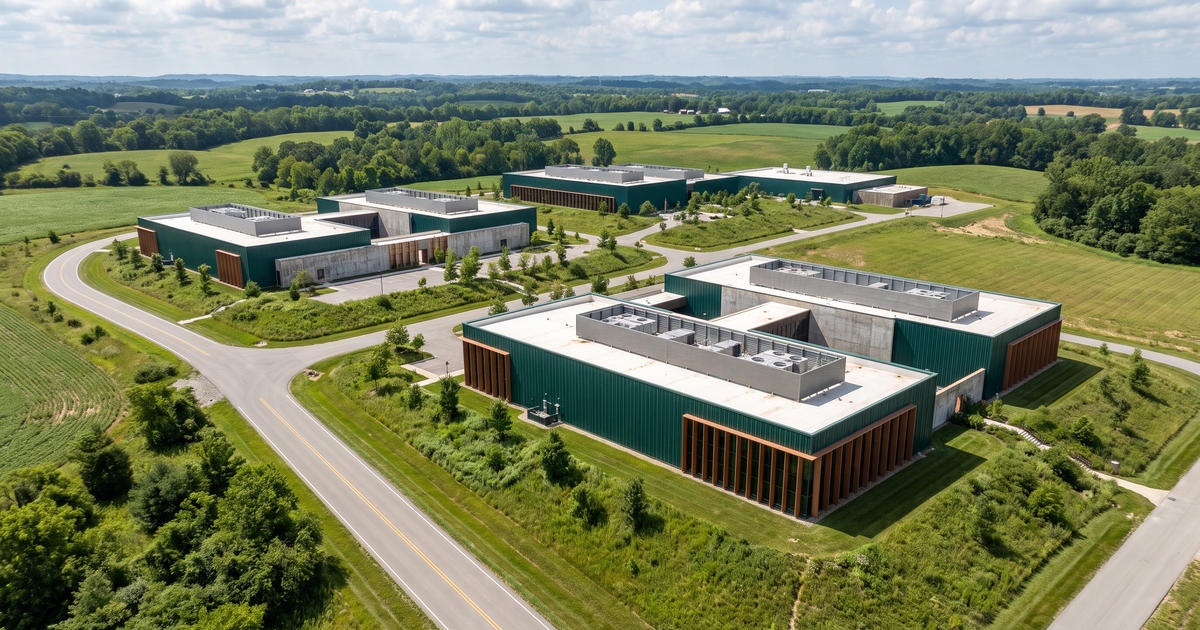
Reporting checked September 19, 2026. Featured and social images are AI-generated concept illustrations, not site photographs or approved designs.
Join 35,000+ Low Voltage Pros
Get weekly permit updates, tool deals, job opportunities, and industry news. No spam, unsubscribe anytime.