
Join Low Voltage Nation — Find project opportunities and showcase your company to thousands of industry professionals
BT Gateway is a $384M, 100,000 sq ft Hunt County data-center filing with open low-voltage package names.
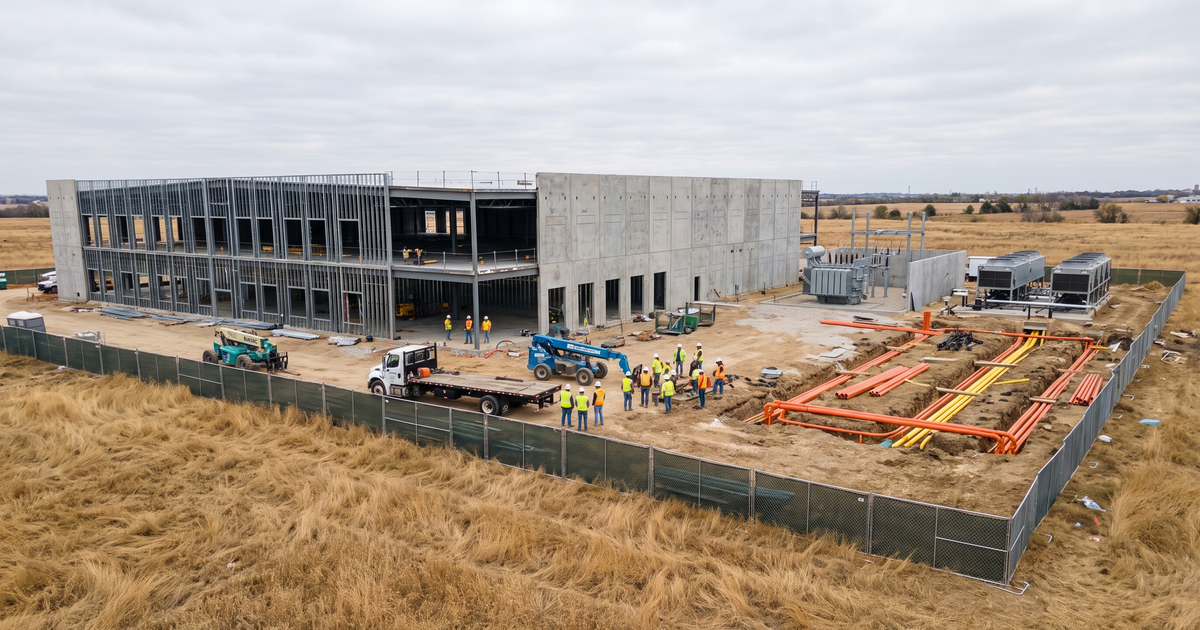
BT Gateway Royse City is a clean public-record data-center watch item for LVN. The Texas Department of Licensing and Regulation TABS2026023619 record lists BT Gateway Data Center at 4989 County Road 2656 outside Royse City in Hunt County, Texas. The filing names BT Gateway Data Center LLC as owner, lists a new 100,000 square foot data-center building, gives a $384 million estimated cost, and sets an August 1, 2026 start with February 12, 2027 completion.
That is enough to publish, but not enough to overstate the project. Reviewed sources do not name a design firm, registered accessibility specialist, general contractor, EPCM, electrical contractor, low-voltage contractor, fiber or outside-plant contractor, security integrator, fire alarm contractor, BAS/BMS/EPMS controls vendor, DAS/networking firm, grounding contractor, utility provider, tenant/customer, or commissioning agent. The useful LVN angle is the exact watch point: a named owner entity, a mappable Hunt County site, a short 2026-2027 window, and open specialty package names.
Trade coverage adds context without replacing the primary record. Data Center Dynamics and Baxtel both summarize the TDLR filing and connect the owner entity to Belltown Power through shared address context. DataCenterMap profiles BT Gateway as a Royse City / Dallas-market data-center project. Those sources are useful for project-family context, but the building-level scope should stay anchored to TDLR until county, owner, utility, or permit records add more detail.
| Item | Source-backed detail | LVN read |
|---|---|---|
| Project | BT Gateway Data Center | New data-center filing near Royse City in Hunt County. |
| Address | 4989 County Road 2656, Royse City, TX 75189 | Specific map point for permit, utility, fiber, and inspection monitoring. |
| Owner | BT Gateway Data Center LLC | TDLR-listed owner; Belltown relationship is context, not a substitute for the filing. |
| Scope | 100,000 sq ft new data center; $384M estimated cost | Large enough to matter for MEP, pathways, fiber, security, controls, fire alarm, and commissioning. |
| Schedule | Start Aug. 1, 2026; completion Feb. 12, 2027 | Short runway for package-award and inspection signals. |
Belltown Power is the project-family signal to watch. The official Belltown projects page lists ten data-center sites totaling 4.1 GW and gives the Dallas office address that matches the BT Gateway Data Center LLC owner address in the TDLR filing. Belltown’s 2025 North Texas data-center announcement describes six North Texas sites planned near transmission hubs for hyperscale and AI-driven operations. For LVN, that points to a repeat-watch developer lane, not a confirmed BT Gateway IT-load disclosure.
Capacity discipline matters here. The current public building record supports 100,000 square feet and $384 million for BT Gateway. Belltown’s 1.435 GW earlier North Texas figure and 4.1 GW current ten-site project-page figure are broader pipeline context. They should not be converted into BT Gateway building-level MW, critical IT load, utility commitment, or tenant load unless a future owner, utility, interconnection, permit, or public-agency record confirms it.
| Company / source | Role | Evidence |
|---|---|---|
| BT Gateway Data Center LLC | TDLR-listed owner | TABS2026023619 |
| Belltown Power | Developer / project-family context | Projects page and North Texas release |
| TDLR | Primary public project record | Filed building scope, schedule, cost, owner, and address |
| Hunt County / Royse City area | Local public-record watch lane | County, utility, permit, and inspection records still need monitoring. |
| DCD / Baxtel / DataCenterMap | Secondary current context | DCD, Baxtel, and DataCenterMap |
The low-voltage opportunity is not a named-award story yet. It is a sequencing story. A new data-center shell in Hunt County will need power, site, pathway, carrier, security, life-safety, controls, and commissioning coordination before turnover. Public records often expose owner, address, square footage, and schedule before they expose the firms holding the low-voltage work. BT Gateway is at that early, useful point.
Fiber and OSP are the first practical watch lanes. The site will need diverse carrier routes or at least documented entrance paths, vaults, handholes, duct banks, splice points, MMR/entrance-facility planning, testing, labeling, and as-built records. Even if a larger national integrator wins the main package, local support can show up through civil pathway work, directional boring, handhole placement, fiber pulling, fusion splicing, OTDR testing, and cleanup documentation.
Structured cabling follows the same pattern. The building size is smaller than many hyperscale campuses, but 100,000 square feet of data-center construction still creates serious pathway, rack/row, cable tray, labeling, grounding, testing, and turnover work. The issue is not whether low-voltage systems exist. The issue is that the public record has not yet named the package holders.
| System | Why it matters | Watch signal |
|---|---|---|
| Fiber / OSP | Data-center connectivity depends on carrier entrance, pathways, vaults, splicing, and test records. | Carrier, duct bank, MMR, vault, handhole, splice, OTDR, and entrance-facility language. |
| Structured cabling | Data halls and support rooms require disciplined tray, labeling, testing, and closeout. | Cable tray, ladder rack, fiber/copper certification, labeling, redlines, and QA reports. |
| Access control / CCTV | Campus and building security will require perimeter, gate, equipment-yard, and interior coverage. | VMS, cameras, card readers, gates, badging, visitor management, and perimeter security. |
| Fire alarm | Large data-center facilities require AHJ coordination, monitoring, suppression interfaces, and acceptance tests. | FA permits, submittals, inspections, acceptance testing, and monitoring references. |
| BMS/BAS / EPMS | Cooling, power, alarms, and facility monitoring need controls integration and commissioning. | Point lists, panels, EPMS/BMS, trend logs, alarms, and commissioning documents. |
| Grounding / commissioning | Mission-critical turnover depends on bonding discipline, test reports, and clean documentation. | Grounding specs, QA/QC, prefunctional checks, commissioning agent, and turnover packages. |
Security and life-safety should stay in the watch list even without a named integrator. Data-center owners normally require secure perimeter control, access-control layers, CCTV coverage, visitor management, fire alarm coordination, monitoring, and commissioning documentation. Any county, utility, site-plan, or inspection record that shows gates, fencing, building entrances, fire lanes, equipment yards, or utility corridors can help forecast where these packages will land.
The workforce angle should stay practical. TDLR does not list construction headcount or permanent jobs for BT Gateway. Instead of inventing job counts, LVN should point members toward readiness: OSHA/site onboarding, lift access, electrical-room coordination, fiber cleaning and inspection, OTDR and power-meter testing, copper certification, pathway discipline, cable tray coordination, grounding and bonding, access-control commissioning, CCTV/VMS setup, fire alarm acceptance, controls point verification, redlines, and closeout documentation.
Vendors can use the record the same way. The public filing does not name vendors, but likely demand categories include fiber consumables, fusion splicing, test gear, labeling systems, pathway materials, cabinets, access-control hardware, cameras, fire alarm devices, controls hardware, facility-network switches, grounding materials, commissioning documentation support, safety training, lift rental, and closeout support. The right move is not to claim a package exists. The right move is to watch for the records that prove it.
Alias control matters because North Texas now has many overlapping data-center records. BT Gateway should be tracked under BT Gateway Data Center, BT Gateway, Belltown Royse City, Belltown Gateway, 4989 County Road 2656, TABS2026023619, Hunt County data center, Royse City data center, and Belltown North Texas data-center site. Keep it distinct from Belltown Project Kahla in Leon County, the withdrawn Quinlan proposal, DataBank Red Oak, Nexus Hubbard, STACK DFW02, and other DFW-region projects.
The next signals are straightforward: TDLR amendments, RAS or design-firm updates, Hunt County or Royse City-area permit movement, utility/substation or service records, ERCOT/PUCT references if they surface, TCEQ filings if generation is added, Belltown updates, plan-room notices, job postings, subcontractor portfolio pages, inspection activity, and local public-agency agendas. Any named GC, electrical, fiber/OSP, security, fire alarm, controls, DAS/networking, grounding, or commissioning firm should update the Signal row.
Bottom line: BT Gateway belongs in LVN Signal because it is a source-backed, mappable, new-construction data-center filing with a named owner entity, a specific Hunt County address, a $384 million public-record cost signal, and a short 2026-2027 construction window. The project is strong enough to publish now, and the package names are still open enough to matter.
Join 35,000+ Low Voltage Pros
Get weekly permit updates, tool deals, job opportunities, and industry news. No spam, unsubscribe anytime.