
Join Low Voltage Nation — Find project opportunities and showcase your company to thousands of industry professionals
Blockfusion’s CoreWeave lease advances a Niagara Falls AI conversion. Explore the engineering evidence, prospective low-voltage work and remaining milestones.
CoreWeave has signed a 15-year anchor lease at Blockfusion’s Niagara Falls campus. For contractors following AI infrastructure, the useful development is the combination of a named customer and documented engineering appointments. The project is an industrial-campus conversion with prospective expansion, while its current construction budget, delivery dates and installation packages remain undisclosed.
Blockfusion’s September 16 announcement identifies its subsidiary North East Data as landlord and includes two five-year renewal options. Separate SEC exhibits identify Jaros, Baum & Bolles for building engineering and FST Engineering for substation design and utility studies. Those roles provide a concrete starting point for understanding the potential work.
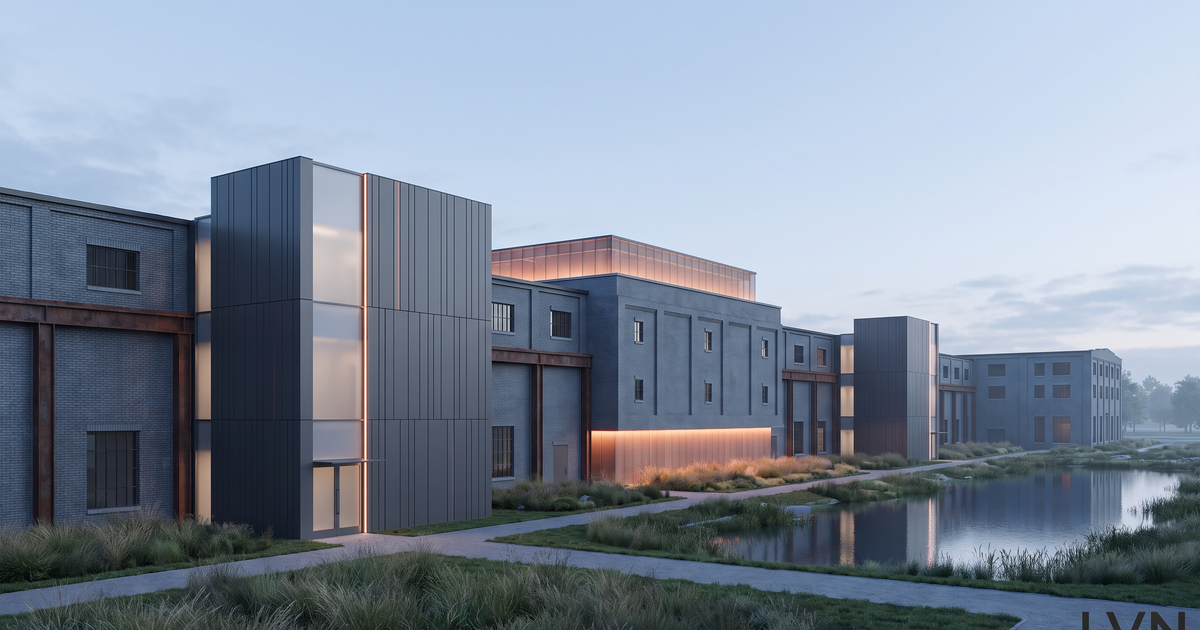
Reporting checked September 21, 2026. Featured artwork is an AI-generated concept illustration; the depicted architecture is an imagined design.
The Niagara Falls project at a glance
| Item | Current evidence | Open question |
|---|---|---|
| Location | 5380 Frontier Avenue | Expansion parcels |
| Development | AI conversion and expansion | Physical build progress |
| Commercial milestone | Definitive CoreWeave lease | Detailed delivery terms |
| Engineering | MEP/FP and power studies | Installation awards |
| Capacity | Current MW undisclosed | Contracted and energized load |
| Construction value | Undisclosed | Phase budgets |
| Jobs | Counts unverified | Employers and openings |
The engineering agreements use 5380 Frontier Avenue. The June registration statement describes the existing Niagara facility as 5380–5384 Frontier Avenue. That identifies the established campus; separate expansion land still needs its own acquisition and permitting evidence.
The owner describes adapting a former power-plant site for liquid-cooled AI, with existing electrical interconnection and redundant fiber. Those attributes explain why an existing industrial location may attract an AI tenant. They do not resolve whether particular buildings, cooling systems or network spaces are ready for handover. LVN is treating the AI construction stage as planned until a specific physical milestone is verified.
How to read the capacity and money
The June 30 proposal described up to 300 MW of critical IT capacity, including an 85 MW take-or-pay anchor. Its modeled revenue was approximately $2.8 billion over the initial term, or $5.4 billion with renewals. Those figures belong to the earlier nonbinding proposal. September’s announcement does not restate them as definitive contracted capacity or economics.
June also described conditional $175 million convertible-note financing and a roughly $33 million non-redemption arrangement, with Sona-managed or advised funds expected to anchor the financing. Closure remains unverified. The contemplated proceeds included working capital and transaction expenses alongside development costs. None supplies a reliable all-in construction budget.
For an estimator, applying a standard low-voltage percentage to lease revenue would produce a misleading opportunity value. Revenue accumulates over operating years, financing can cover several uses, and a construction contract buys a defined scope. A defensible estimate needs drawings, quantities, procurement boundaries and a cost basis tied to the relevant phase.
The September transaction update extended the proposed combination with Blue Acquisition to a November 30 outside date. That is a transaction deadline. Campus completion requires separate evidence. The later lease milestone should therefore improve confidence in the customer relationship without turning every historical forecast into a current commitment.
Who is named, and what each role establishes
| Organization | Documented role | Evidence |
|---|---|---|
| Blockfusion / North East Data | Operator / landlord | Lease release |
| CoreWeave | Anchor tenant | Lease release |
| Jaros, Baum & Bolles | MEP/fire engineering | February agreement |
| FST Engineering | Substation design/studies | March agreement |
| National Grid / NYISO | Utility/grid study interfaces | Study requirements |
| Blue Acquisition | Proposed transaction partner | SEC update |
| Sona Asset Management | Prospective financing anchor | June proposal |
The February 26 agreement retains Jaros, Baum & Bolles, Inc. for mechanical, electrical, plumbing and fire-protection engineering. It also addresses earlier due-diligence services by an affiliated JB&B entity. The firm’s data-center practice page provides company context; the SEC agreement establishes this project relationship.
FST’s March 3 agreement covers 230 kV substation design and utility studies, including NYISO modeling and revisions requested by NYISO or National Grid. The 230 kV figure describes voltage. It cannot be read as a 230 MW campus capacity announcement. The agreement establishes an engineering assignment, while approvals, installed equipment and energization remain separate milestones. FST Engineering’s website identifies the relevant power-engineering business.
No reviewed source establishes a general contractor, electrical installer, structured-cabling contractor, security integrator or fire-alarm installer for this conversion. Company names should carry their specific roles when shared with a sales or estimating team. Treating every participant as a contractor would send qualification work in the wrong direction.
Where prospective low-voltage work could emerge
The following is LVN’s scope analysis. It describes questions that the announced conversion raises, with actual packages dependent on design and procurement documents.
| System | Potential work | Evidence to request |
|---|---|---|
| Fiber / outside plant | Entrances and campus links | Routes and demarcations |
| Structured cabling | Facility/network spaces | Cable and pathway schedules |
| Controls / BMS | Cooling telemetry and alarms | Points and interface matrix |
| Fire interfaces | Life-safety coordination | Approved design and scope |
| Access / CCTV | Controlled areas and monitoring | Security specifications |
| Bonding / turnover | Coordination and test records | Acceptance responsibilities |
For fiber firms, the first useful question is how existing carrier infrastructure connects to the proposed AI spaces. Route diversity, available pathways, demarcation locations and tenant handoff boundaries need documentation. Two named carriers or multiple cables alone would not show that separate paths avoid a common failure point. Before budgeting, request route drawings and the owner’s acceptance criteria.
An adaptive-reuse setting also raises practical survey questions. Which pathways can be reused? Which rooms remain active during work? Who controls outage windows and penetrations? These are planning questions for any comparable conversion, rather than claims about conditions observed at Niagara. A field survey and coordinated drawings would determine whether existing infrastructure reduces installation effort or introduces additional constraints.
For controls teams, liquid cooling makes the division of responsibility worth clarifying early: equipment controls, facility monitoring, alarms, network connections and integrated testing may involve different parties. A bidder should ask for a point list and interface matrix before pricing. The MEP engineering appointment provides a reason to investigate these boundaries, but it does not disclose a Niagara controls package.
Security and fire contractors need similarly specific information. Device counts, monitoring requirements, door schedules, approved life-safety interfaces and commissioning responsibilities determine scope. Public-safety radio or commercial DAS requirements remain unverified. Adding those systems to a quote solely because the building is a data center would outrun the available evidence.
Testing deserves a separate line of inquiry. Ask who writes the acceptance plan, who witnesses tests, how deficiencies are closed and what format the final records must take. Agree on the relationship between field labels, drawings and test filenames before installation begins. These questions can expose handoff gaps while there is still time to price and schedule the work. For Niagara, the relevant test specifications and commissioning team remain unknown.
Jobs, trades and useful preparation
Project-specific construction and permanent employment totals have not been verified. Neither a tenant announcement nor an engineering contract establishes current vacancies. Technicians should look for an identified hiring employer, project location, start window and role description before making travel or training decisions around this campus.
For firms preparing for comparable work, useful capabilities include fiber inspection and cleaning, disciplined testing, cable identification, pathway coordination and complete turnover records. A concise capability package can show previous project types, available crews, relevant equipment and examples of organized acceptance documentation. Keep customer-confidential records out of public portfolios.
The Fiber Optic Association’s workforce resources provide a starting point for fiber learning and certification pathways. BICSI’s training catalog offers installation-related education. These are general resources; the reviewed project sources do not mandate a particular certification.
OSHA Outreach is another general training reference. OSHA describes its program as voluntary and distinguishes it from training required by specific standards. Actual contractor onboarding, task training and site access requirements must come from the employer and project team. A generic course list cannot establish eligibility to work at this facility.
The milestones that would make the opportunity actionable
The SEC-filed lease announcement says additional detail will appear in a later registration amendment. It also identifies conditions around expansion, including firm power commitments and CoreWeave’s approval of the power infrastructure plan. Additional capacity may remain unleased. A signed expansion framework should therefore be followed through to the capacity commitments and delivery obligations it eventually produces.
The next useful evidence falls into four groups:
- Commercial detail: definitive contracted MW, phased delivery obligations and the division between anchor and expansion capacity.
- Site and power: expansion land control, applicable permits, utility approvals and documented energization plans.
- Construction procurement: a named delivery team, actual bid invitations, package boundaries and a verified field-start milestone.
- Workforce: project-linked hiring, contractor prequalification and confirmed mobilization requirements.
For a low-voltage business, those milestones help decide when to spend estimating time. A documented package with quantities, a buyer and a schedule supports a bid decision. An early commercial announcement supports account research and preparation. Keeping those stages explicit makes the pipeline more useful to both business development and operations.
A useful qualification note should state the source date, the exact party named and the next missing document. It should distinguish engineering procurement from installation procurement and identify whether a contact represents the owner, consultant or purchasing contractor. That gives the next person reviewing the opportunity enough context to ask a focused question. It also prevents a familiar company logo from being mistaken for proof of an awarded Niagara subcontract.
Explore projects through LVN Signal. Use the Niagara Falls development as a starting point for researching owners, engineering teams and prospective trade work, then qualify each opportunity against the latest source documents and procurement evidence.
Join 35,000+ Low Voltage Pros
Get weekly permit updates, tool deals, job opportunities, and industry news. No spam, unsubscribe anytime.