
Join Low Voltage Nation — Find project opportunities and showcase your company to thousands of industry professionals
Big Watt and PowerHouse report development-agreement approval east of Taylor, Texas. Review the initial 500 MW plan, expansion option, named partners and prospective low-voltage work.
Taylor Technology Campus has cleared a development-agreement milestone for a proposed AI data-center campus east of Taylor, Texas. Big Watt Digital and PowerHouse Data Centers announced the approval on October 9. Their earlier project disclosure describes an initial 500 MW data-center load and a tenant option for another 500 MW. The potential scale creates a substantial prospect for contractors serving power, connectivity and building systems, while procurement details remain open.
The project is still planned. Publicly reviewed material does not establish a construction start, named tenant, closed financing or awarded low-voltage packages. For a specialty contractor, the useful next step is to identify the eventual package buyer and follow released design information before assigning revenue or crews to the opportunity.
The project and its current milestone
The City of Taylor project overview locates the approximately 664-acre campus between FM 112 and US 79, immediately east of the city's current limits. Earlier records call it Project Mustang. Those names describe the same campus family.
| Item | Reported position | Qualification |
|---|---|---|
| Location | East of Taylor, Texas | Approximately 664 acres |
| Stage | Development agreement approved | Construction start unverified |
| Starting plan | 500 MW data-center load | Precise load boundary unspecified |
| Expansion | Optional additional 500 MW | Tenant option; uncommitted |
| First power | First half of 2028 target | Future delivery milestone |
| Project budget | Undisclosed | Financing close unverified |
The October 9 developer announcement establishes the reported agreement approval. The city webpage still describes an upcoming October 8 vote, so its overview must be read in that earlier context. The signed agreement, completed annexation and final construction permits were not independently verified for this report.
That sequence matters commercially. An agreement can advance a project without producing a released scope for a cabling estimator. Contractors should look for subsequent evidence that identifies the design stage, bidding route, contracting entity and authorized schedule. A prospect can be worth developing before those documents arrive, provided its uncertainty stays visible.
Capacity and power need separate definitions
The October 2 announcement supplies the 500 MW starting load and additional 500 MW option. The later release describes potential capacity of up to one gigawatt. Neither reviewed disclosure precisely reconciles critical IT load, total facility demand and generation capacity. No currently energized IT load has been verified.
Big Watt describes dedicated generation serving the campus behind the meter, with first power targeted for the first half of 2028. Final equipment selection, plant capacity, gas supply, grid arrangements and commissioning dates remain unverified. The delivery target should therefore remain a forecast throughout bidding and workforce discussions.
Our contractor analysis is that the power strategy makes interface management an early question. A future data-center package might meet a separate generation package at communications pathways, monitoring systems, control networks or commissioning responsibilities. The owner and design teams will need to define those boundaries. A headline capacity figure cannot tell an estimator which party buys the fiber, who supplies network hardware, or who accepts the final test records.
The named organizations and the limits of their roles
Big Watt Digital and PowerHouse Data Centers are the announced co-developers. PowerHouse is a division of American Real Estate Partners. Two other organizations appear in the reviewed evidence, with narrower roles: Kimley-Horn on an earlier road concept and RCLCO on economic analysis.
| Organization | Documented role | Evidence limit |
|---|---|---|
| Big Watt Digital | Co-developer | Final EPC role unverified |
| PowerHouse Data Centers | Co-developer | Tenant remains unnamed |
| Kimley-Horn | Historical road concept | Final campus design unverified |
| RCLCO | Economic-impact study | Original methodology unreviewed |
| GC and specialty trades | Unknown | No verified awards |
A July 22 Kimley-Horn road-alignment exhibit, obtained through a third-party archive of county records, shows building concepts, easements and alternative road alignments. Its conceptual, unsurveyed disclaimer limits what can be inferred. An original county-hosted copy was not independently retrieved. The drawing does not establish a final campus design appointment, approved road plan or active utility service.
Company experience can help a contractor understand a development team's background, but awards from other PowerHouse projects do not identify Taylor's delivery team. The relevant future evidence is a Taylor-specific announcement, solicitation or contract. The same discipline applies to equipment vendors and security integrators.
Read the economic forecasts with their assumptions
The October 2 release attributes its economic projections to RCLCO and describes a fully optioned project. Its $4.8 billion figure measures forecast regional economic output during the projected 2027–2029 construction period. Project capital cost remains undisclosed. No low-voltage contract value can responsibly be calculated as a percentage of that regional output figure.
The releases also differ in their recurring employment presentation. October 2 describes 320 countywide FTE jobs; October 9 describes 500 countywide, including 320 within Taylor. The construction-period estimates move from 19,350 to approximately 19,000 FTE jobs. These are regional model outputs. Direct site headcount, the direct-versus-indirect split and the study's job-year methodology remain unverified.
Community commitments are a separate category again. The newer announcement and city overview describe approximately $28.2 million; the earlier release has a $22 million heading whose itemized amounts differ. Completed payments have not been verified. For contractors, the practical interpretation is to keep construction cost, regional effects, tax projections and community commitments in separate columns when assessing the opportunity.
Where low voltage could enter the project
The following packages are prospective analyst assessments based on the announced campus and power strategy. They are not verified bid packages, design quantities or awards. The purpose is to identify the questions that would turn a large development announcement into a scope a contractor can price.
| System | Prospective work | Next evidence |
|---|---|---|
| Fiber and OSP | Entrances, pathways, splicing | Routes, carriers and buyer |
| Structured cabling | Pathways, links, labeling | Issued design and quantities |
| Access and cameras | Building and perimeter systems | Integrator and responsibilities |
| Fire interfaces | Monitoring and coordination | Approved life-safety design |
| Controls networks | Power and cooling telemetry | Equipment and network ownership |
| Commissioning | Testing and turnover records | Acceptance plan and schedule |
Start with the route and the contracting boundary. An OSP firm should ask where public carrier work ends, who controls campus pathways and when civil designs will be released. A fiber integrator should ask about acceptance testing and documentation before offering a generic cost per link. Carrier proximity alone does not establish a service agreement or route diversity.
Separate installation from integration. Security cabling, device installation, software configuration and final acceptance may have different buyers. Similarly, a controls contractor needs to know whether a network belongs to building operations, the power plant or the eventual tenant. Clarifying ownership, access and handover expectations early can prevent a quotation from silently absorbing another contractor's responsibilities.
Price the documents that actually exist. At this stage, a useful capability package can demonstrate comparable work, crew coverage, test reporting and coordination experience. A firm price requires defined drawings, exclusions and a commercial schedule. Travel, supervision, temporary facilities and phased turnover should be considered when those requirements become available.
Water and site planning affect the trade sequence
The city's overview describes a proposed closed-loop cooling system using reclaimed water, including an initial fill of 1.575 million gallons and specified exceptions for potable-water use. That initial fill is not an annual consumption forecast. The page also discusses utility connections, setbacks, traffic review, lighting and noise provisions.
For specialty contractors, our inference is that final civil and utility decisions could shape access, trench coordination and installation sequencing. A conceptual building arrangement provides little certainty about approved entrances, laydown space or final pathways. The map reference used in this coverage locates Taylor at city precision; it should never serve as a delivery address or a surveyed campus boundary.
Workforce preparation before hiring is confirmed
No verified project-specific hiring count or open trade recruitment campaign was found. Technicians can still prepare for the type of work a future campus may require. The Fiber Optic Association's workforce guidance describes routes into fiber installation, splicing and testing, and explains the value of training followed by practical experience.
For a crew leader, a useful preparation checklist includes connector inspection and cleaning, test-result organization, cable identification, drawing revisions and defect closeout. Cabling teams should be able to explain their pathway and grounding coordination. Controls and security teams should be ready to document how their work is tested and handed over. These are general preparation suggestions; Taylor's specifications remain unknown.
OSHA Outreach Training is a general safety-education resource. Employers and project requirements determine the applicable training and site-access needs. Confirm lift access, task-specific training, onboarding and any manufacturer qualifications with the actual contractor. Neither a regional jobs forecast nor a general training resource establishes that a particular credential will secure work here.
The milestones that make this actionable
Watch for the executed agreement and annexation record, final permits, a named tenant, financing evidence, actual construction authorization and a published delivery team. For the specialty trades, the strongest next signal would be a named package buyer with released drawings, a prequalification route and dates for bidding and mobilization.
Taylor is useful early-stage intelligence because the development team, location and capacity plan are identifiable. It remains an opportunity to qualify as delivery evidence develops. Use LVN Signal to research construction opportunities, follow the companies involved and focus business development on scopes your team can execute.
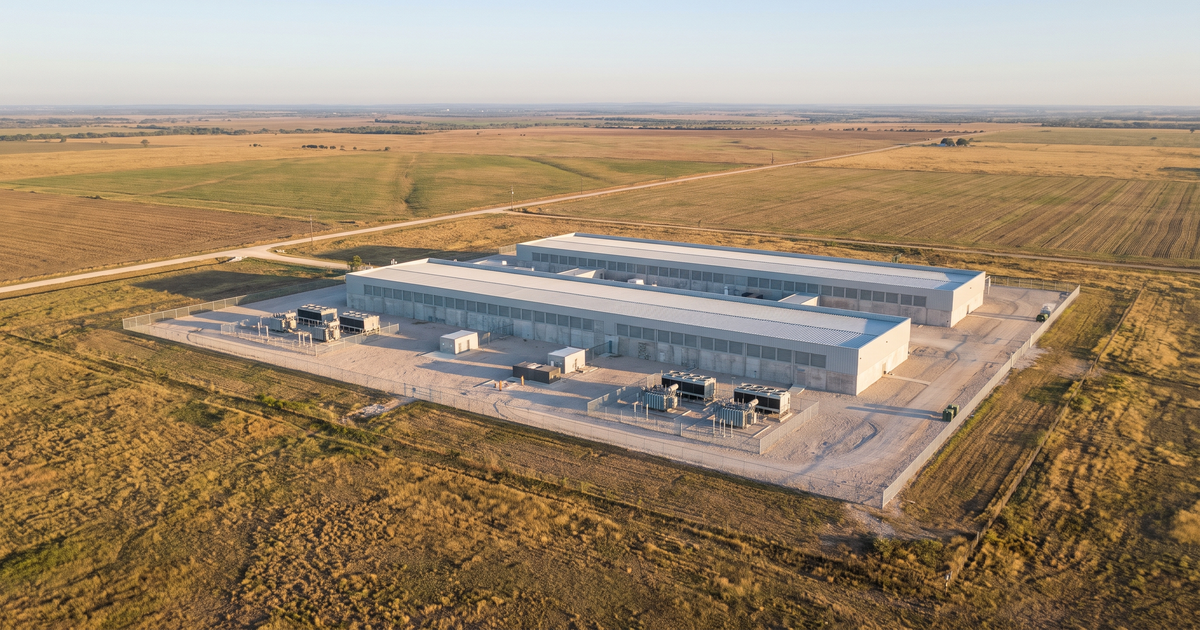
Reporting checked October 11, 2026. Featured and social artwork are AI-generated editorial illustrations; they do not depict verified construction progress or an approved Taylor site design.
Join 35,000+ Low Voltage Pros
Get weekly permit updates, tool deals, job opportunities, and industry news. No spam, unsubscribe anytime.