
Join Low Voltage Nation — Find project opportunities and showcase your company to thousands of industry professionals
AVAIO Project Leo near Little Rock has broken ground with 150 MW initial Entergy service and a 1,070 MW power path. LV package names are next.
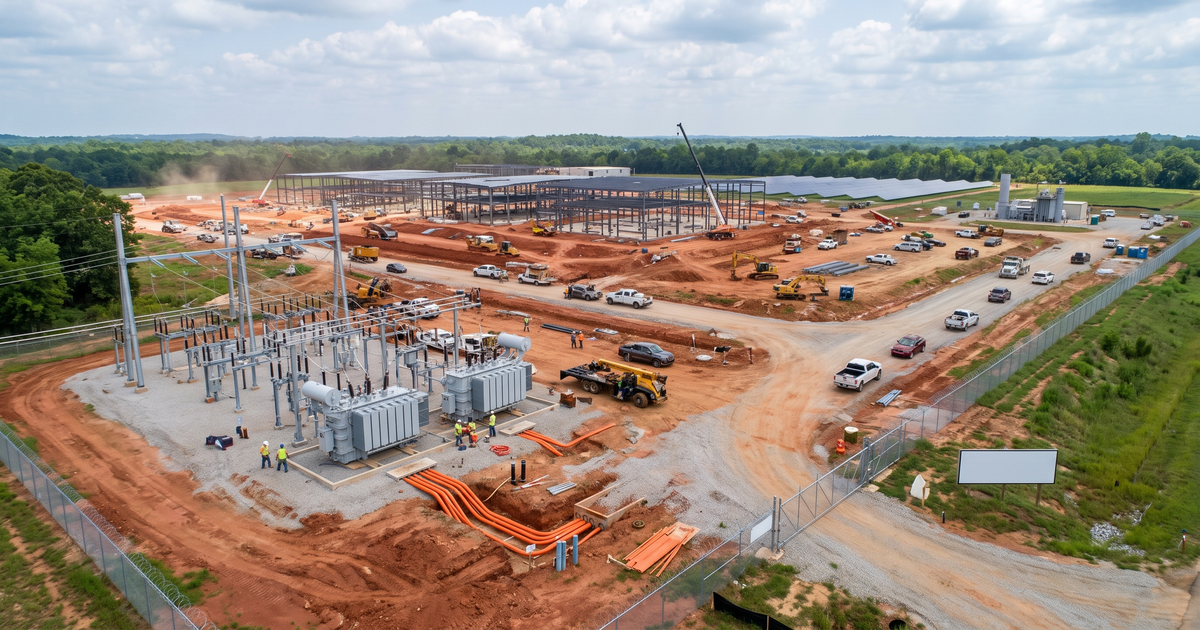
AVAIO Digital Leo is a strong LVN Signal watch because it combines an owner-operated AI data-center campus, a live utility service agreement, a gas-backed power path, approved site planning, and a public first-occupancy target. AVAIO's official Little Rock campus page says Project Leo has broken ground on a 760-acre site near Little Rock, Arkansas, has an approved site plan, and is targeting first occupancy in June 2027.
The public construction signal is not a named low-voltage award yet. It is the scale and timing of the campus. AVAIO lists a path to 1,070 MW of total baseload power through 570 MW of grid power, 500 MW of behind-the-meter baseload power, and more than 75 MW of planned onsite solar. The same owner page says AVAIO has an executed Entergy Arkansas service agreement for 150 MW energized in April 2027, planned additional Entergy grid power in 2030, and direct Kinder Morgan NGPL gas-pipeline access for behind-the-meter generation.
For low-voltage contractors, that means the useful read is practical and conservative: the site is real enough to track, but the specialty package holders are not public. The owner, utility context, gas-pipeline context, state economic-development support, fiber-entry language, and jobs signal are source-backed. The general contractor, EPCM, engineer of record, electrical contractor, low-voltage contractor, fiber contractor, security integrator, fire alarm contractor, BAS/BMS controls firm, DAS/networking provider, grounding contractor, and commissioning agent remain unknown until a public record, job posting, plan-room notice, or company source names them.
| Project Fact | Source-Backed Detail | LVN Read |
|---|---|---|
| Campus | 760-acre Project Leo site near Little Rock / Pulaski County. | Large AI-ready campus watch, not a single small facility. |
| Status | AVAIO says the campus has broken ground and has an approved site plan. | Track permits, package awards, and construction mobilization. |
| First occupancy | Owner page targets June 2027. | 2026-2027 package timing matters for LV firms. |
| Initial grid service | Executed Entergy Arkansas service agreement for 150 MW energized in April 2027. | Near-term power milestone that can unlock building and systems work. |
| Total power path | AVAIO lists 1,070 MW total baseload power path. | Do not treat this as confirmed building-level IT critical load. |
The official announcement adds the investment and workforce frame. In its January 2026 project announcement, AVAIO described Leo as a large-scale AI-ready data-center and power campus with an initial combined investment of $6 billion from AVAIO and customers in infrastructure, power, and tenant deployments. The same announcement says the campus is expected to create more than 500 full-time operations jobs over five years and thousands of construction jobs.
The Arkansas Economic Development Commission mirrored the announcement, which gives the project a useful public-agency trail. AEDC repeats the $6 billion first-phase investment, the 150 MW Entergy Arkansas power contract, expected growth toward a 1 GW campus, more than 500 operations jobs, and thousands of construction jobs. That does not identify the trade contractors, but it does make Project Leo more than a rumor or directory listing.
Entergy Arkansas is important because power is the gating factor on many AI campuses. AVAIO names Entergy Arkansas directly in the owner materials, and Entergy's Arkansas data-center page frames data centers as major grid customers in the state. For LVN readers, the Entergy angle is not a low-voltage award. It is schedule context: a 150 MW initial service agreement with an April 2027 energized target gives contractors a concrete milestone to watch alongside building permits, substations, switchgear, campus fiber, and commissioning plans.
The behind-the-meter power path is equally important. AVAIO's owner page says Project Leo has direct Kinder Morgan NGPL gas-pipeline access to support more than 500 MW of behind-the-meter baseload power generation. That does not make Kinder Morgan a data-center contractor, and it does not name the power-plant EPC. It does tell LVN that this campus is being designed around power infrastructure as part of the data-center product. Power controls, operational networking, SCADA adjacency, BMS/BAS interfaces, security, and commissioning coordination should be watched as the power side moves into visible construction and permitting.
| Organization | Source-Backed Role | Evidence |
|---|---|---|
| AVAIO Digital Partners | Owner/operator and project developer. | Official Project Leo page. |
| Entergy Arkansas | Utility context; initial 150 MW service agreement named by AVAIO. | Owner project page. |
| Kinder Morgan / NGPL | Gas-pipeline context for behind-the-meter power path. | Owner project page. |
| Arkansas EDC | State economic-development source and public-agency context. | AEDC release. |
| Pulaski County / Little Rock | Local jurisdiction and market context. | Named in owner and public-agency materials. |
Secondary directory sources line up with the owner-side story. Baxtel's AVAIO Little Rock profile lists the campus in Little Rock / Pulaski County, shows Entergy Arkansas as the utility provider, and repeats the 760-acre and 2027 timing context. DataCenterMap's AVAIO Digital Leo profile identifies the project near Wrightsville / Little Rock and repeats the 150 MW initial Entergy Arkansas power and June 2027 energization context. Those are not primary sources, but they help triangulate the campus identity and aliases contractors may see in search, permits, or plan rooms.
The low-voltage opportunity is straightforward: a 760-acre AI-ready data-center and power campus with four non-single-point-of-failure fiber entry points, utility grid power, behind-the-meter generation, and a June 2027 first-occupancy target will need serious communications, security, life-safety, controls, and commissioning work. The current public evidence does not say who owns those packages. LVN should treat the project as a high-confidence watch item, not as a list of awarded subcontractors.
| LV System | Why It Matters | Watch For |
|---|---|---|
| Fiber / OSP | AVAIO says the campus has four non-single-point-of-failure fiber entry points. | Carrier routes, duct bank, MMR, splice, test, and documentation signals. |
| Structured cabling | AI-ready data halls need disciplined pathways, labeling, testing, and turnover. | Low-voltage bid packages, rack/row work, and QA requirements. |
| Access control / CCTV | Large power/data-center campuses need perimeter, gate, building, and data-hall coverage. | Security integrator awards, VMS, credentialing, and commissioning scopes. |
| Fire alarm / life safety | Building occupancy and data-hall turnover depend on AHJ acceptance. | Permit movement, FA contractor names, inspections, and acceptance testing. |
| BMS/BAS / networking | Grid power, onsite generation, cooling, alarms, and facility systems need controls coordination. | Controls integrator, SCADA adjacency, network, and commissioning evidence. |
The jobs and skills angle should be framed around readiness. AVAIO and AEDC both describe more than 500 full-time operations jobs over five years and thousands of construction jobs. For LVN workers and contractors, that points to practical data-center readiness: OSHA/site access, lift operation, fiber cleaning and testing, copper/fiber certification, pathway installation, grounding and bonding, labeling discipline, firestop coordination, access-control rough-in, camera placement, BAS/BMS coordination, commissioning documentation, and the ability to work cleanly around electrical, mechanical, and power-generation teams.
The best next signals are public and testable. Watch Pulaski County and Little Rock / Wrightsville-area permitting, Arkansas Public Service Commission and utility records, Entergy Arkansas milestones, Kinder Morgan / NGPL context, AVAIO updates, plan-room or prequalification notices, and job postings. The first appearance of a named GC, EPCM, engineer, electrical contractor, fiber contractor, security integrator, fire alarm contractor, controls firm, or commissioning agent is the moment this moves from a high-confidence campus watch to a more actionable pursuit list.
LVN Signal should keep the capacity language tight. AVAIO's 1,070 MW number is the total baseload power path, not confirmed building-level IT critical load. The 150 MW number is the executed initial Entergy Arkansas grid service targeted for April 2027. The public source set supports a $6 billion initial investment, a 760-acre campus, more than 500 operations jobs, thousands of construction jobs, and a June 2027 first-occupancy target. It does not yet support named specialty package awards. That is the honest contractor read.
For Low Voltage Nation members in Arkansas and the broader South Central market, Project Leo belongs on the watch board now. The public evidence is strong enough to track, but the package names are still open. That is exactly where LVN Signal can help: preserve the source-backed facts, monitor the next public records, and turn the first named contractor and trade-package signals into practical outreach, hiring, and training moves.
Join 35,000+ Low Voltage Pros
Get weekly permit updates, tool deals, job opportunities, and industry news. No spam, unsubscribe anytime.