
Join Low Voltage Nation — Find project opportunities and showcase your company to thousands of industry professionals
AVAIO targets first-phase power in 2027 for its planned Virginia campus. Follow the utility roles, regional fiber context and unresolved construction packages.
AVAIO Digital’s planned Project Hercules campus in Appomattox County, Virginia, gives construction firms a developing opportunity to follow: a first phase marketed with 50 megawatts of baseload power and a 2027 energization target. The wider campus carries a historical $3 billion development estimate. The work that determines when contractors can act is still taking shape around power delivery, permits, land agreements and the people who will buy each trade package.
The latest schedule signal comes from Cardinal News’ October 5 reporting. Appomattox Economic Development Authority chair Garet Bosiger said construction had yet to begin and was expected by year-end. County administrator Susan Adams described additional transmission capacity as still being finalized. Those statements support a planned project with a prospective start; an actual construction start remains unverified.
What Project Hercules includes
AVAIO’s Hercules project page locates the campus at 267 Industrial Park Lane and describes a 436-acre site with approved site planning and a completed load study. The developer markets Hercules for AI, high-performance computing and cloud infrastructure. No named tenant commitment was verified in the reviewed sources. A campus built to accommodate those uses can still have an initial customer serving conventional digital workloads.
| Project fact | Reported position | Qualification |
|---|---|---|
| Location | Appomattox County, Virginia | 267 Industrial Park Lane |
| Development stage | Planned new construction | Actual start unverified |
| Campus estimate | $3 billion | December 2024 announcement |
| First-phase power | 50 MW baseload | 2027 developer target |
| Wider grid plan | 300 MW | Separate utility-power figure |
| Land area | 436 acres currently listed | Older sources: 442 / 452 acres |
| Tenant and GC | Unconfirmed | No verified trade awards |
The December 10, 2024 announcement described an agreement to purchase 452 acres, a $3 billion campus plan and 300 MW of utility power associated with CVEC and Dominion. That announcement supplies the original investment estimate. It does not establish financing close, expenditure to date, current capacity delivered to buildings or a low-voltage subcontract budget. Contractors should seek a phase-specific scope and commercial package before using the headline value in an estimate.
Follow the power phases separately
AVAIO’s current portfolio page identifies Appomattox’s first phase as 50 MW of baseload power, with energization targeted for 2027. The older 300 MW figure describes a broader grid-power plan. Neither figure establishes tenant IT load. IT capacity, total facility demand, reserved utility capacity and equipment ratings require their own definitions and supporting documents.
For an electrical or controls firm, that distinction affects the questions to ask. Which building receives the first service? What power is available for commissioning? Which utility upgrades support later phases? When can permanent systems replace temporary construction arrangements? The reviewed public material does not settle that delivery sequence. An approved load study and a marketed power target are useful development milestones, while an issued utility schedule would provide a stronger basis for staffing and procurement.
The county EDA’s public Q&A assigns transmission to Dominion Energy and local distribution to Central Virginia Electric Cooperative. It describes developer responsibility for a dedicated campus substation and associated upgrades. These are source-attributed utility roles; the actual construction contractor, equipment supplier and executed service documents were not independently established.
Two Appomattox substation stories
CVEC has a separate project underway to replace its existing Appomattox substation. Its replacement-substation announcement says the new facility will serve existing members and explicitly excludes the proposed data-center campus. That distinction matters because the utility project is also located in the Appomattox Business Park.
The replacement project’s ten-acre site, approximately one mile of 115 kV transmission and reported construction activity belong to that utility project. They cannot establish that Hercules has broken ground. When reviewing photographs, permits or a vendor’s project list, confirm the project owner, parcel and service destination before assigning the work to the data-center campus. A nearby substation can produce a convincing but incorrect construction narrative.
The organizations identified so far
The named organizations provide a starting point for understanding responsibility. Their participation has different meanings: developer, public authority, utility, regional network or prospective workforce support. A general contractor, design firm, electrical contractor and specialty low-voltage installer were not verified. None of the regional organizations below should be described as holding a campus trade award.
| Organization | Identified role | Evidence boundary |
|---|---|---|
| AVAIO Digital | Campus developer | Current land closing unverified |
| Appomattox EDA | Land-option counterparty | Public development authority |
| CVEC | Local power distribution | Dedicated campus scope unresolved |
| Dominion Energy | Transmission provider | Expanded delivery unverified |
| Town of Appomattox | Water and sewer commitment | Described in EDA Q&A |
| Mid-Atlantic Broadband | Regional fiber context | Campus carrier award unconfirmed |
| Central Virginia Community College | Planned training support | Hiring agreement unverified |
Land, approvals and water still need careful reading
The acreage differs across sources: 436 on the current developer page, 452 in the original announcement and approximately 442 in the EDA Q&A. The undated county document describes an option-stage transaction and says the property had not changed hands when that answer was written. Current conveyance and the final development boundary remain unverified. Those differences could reflect changing project definitions, but the reviewed evidence does not explain them.
The EDA describes approval of site plans for Building 1 and a substation. Cardinal News also reports the county administrator’s statement that the stormwater plan has state approval and that lawyers were finalizing performance-agreement language. These accounts do not establish that every building or generator permit has been issued. Firms preparing proposals should request the actual plan revision, permit conditions and execution schedule that govern their work.
For water, the EDA describes a Town of Appomattox commitment of up to 45,000 gallons per day and public wastewater service. This is a service commitment reported by the authority; the original signed letter was not reviewed. It is also distinct from measured consumption. The campus’s final cooling design, equipment selections and operating conditions will matter to controls integration and water-system monitoring. Claims about future resource performance should retain their design assumptions.
Where low-voltage work could develop
The strongest connectivity lead is the location near regional long-haul routes. The EDA identifies Mid-Atlantic Broadband’s network as regional context and says AVAIO will select final carriers and connection paths according to customer requirements. MBC’s own website describes its regional fiber business. Together, those sources justify following the connectivity work; they do not identify a campus installation contract or establish physical route diversity.
| Potential package | Practical work | What to confirm |
|---|---|---|
| Fiber / outside plant | Entrances, splicing, testing | Carriers, routes, package buyer |
| Structured cabling | Pathways, labeling, QA | Issued design and quantities |
| Access control / video | Perimeter and building integration | Integrator and specifications |
| Fire-alarm interfaces | Monitoring and system coordination | Approved life-safety design |
| Controls / networking | Equipment telemetry and alarms | IT/OT responsibility boundaries |
| Commissioning | Integrated tests and turnover | Acceptance plan and schedule |
These rows are analyst assessments of potential work for this building type. No open solicitation, bid deadline or awarded specialty package was verified. For OSP firms, useful early documents would include entrance locations, easements, duct-bank coordination and utility crossings. Inside the buildings, pathway ownership, grounding and bonding, cable identification and the required test records would help define a complete scope.
Security, fire and controls firms should ask who owns each system interface. A camera network can touch the facilities network, while an alarm point can involve the electrical contractor, controls integrator and commissioning team. Clarifying responsibility before pricing reduces gaps in testing and turnover. Those are preparation questions, with actual Hercules system architecture still to be confirmed.
Jobs, trades and skills
Employment forecasts also have different bases. Cardinal News attributes at least 500 construction jobs and 25–40 operating positions per building to Bosiger, with six or seven buildings contemplated. The EDA Q&A instead describes 1,500–2,000 workers at peak construction, six facilities and typical operations staffing of 25–35 people per facility. Both describe future expectations. They should remain separately attributed, without adding them into one jobs total or presenting them as current vacancies.
The county document describes planned Data Center Academy support through Central Virginia Community College. An active cohort, project-specific hiring arrangement and guaranteed placements were not independently verified. Prospective students can use the college’s website to check current offerings and ask which employers participate. Any project employment claim should come from the actual employer and a current opening.
For technicians, useful preparation includes fiber inspection, cleaning, splicing and testing; pathway installation; clear labeling; and accurate closeout records. The Fiber Optic Association’s workforce resources provide general training information. Grounding and bonding, lift competence, site access, safety onboarding and integrated commissioning are additional areas to discuss with prospective employers. Specific credentials, testing standards and manufacturer authorizations will depend on the awarded package and customer requirements.
The milestones that make the opportunity actionable
The next useful evidence would be a verified construction start, current land closing, executed utility delivery arrangements, issued phase drawings and named procurement contacts. A tenant announcement could clarify the operating requirements that shape the first building. A GC or construction manager appointment could identify where subcontractor qualification and bid invitations will originate. Until those facts emerge, Hercules is a development lead with meaningful infrastructure context.
Use LVN Signal to follow the project, connect named organizations to source-backed milestones and identify the buyer for the work your company performs. For this campus, the practical sequence is to understand the phase, confirm the responsible organization and then evaluate the actual package.
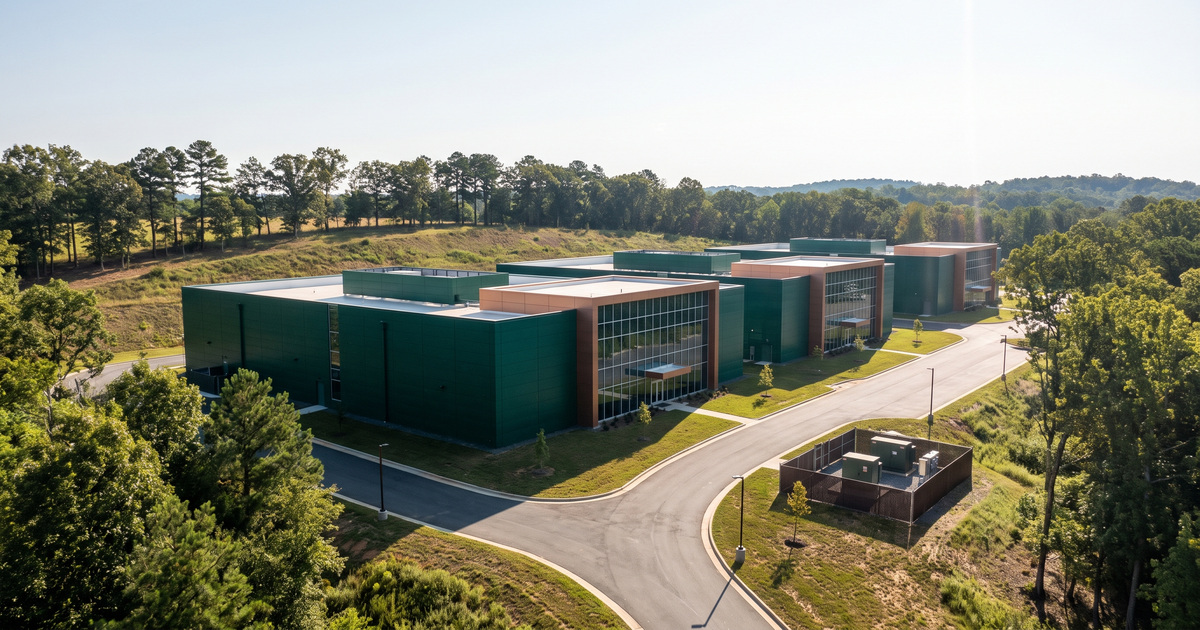
Reporting checked October 8, 2026. Featured and social artwork are AI-generated editorial illustrations, not approved site plans or photographs of construction. Public forecasts and source discrepancies are preserved above.
Join 35,000+ Low Voltage Pros
Get weekly permit updates, tool deals, job opportunities, and industry news. No spam, unsubscribe anytime.