
Join Low Voltage Nation — Find project opportunities and showcase your company to thousands of industry professionals
Polaris Forge 2 is under construction near Harwood. Explore its 200 MW IT lease, named partners, utility fiber scope and forecast jobs.
Polaris Forge 2 near Harwood, North Dakota, combines a historically announced $3 billion campus investment with 200 MW of contracted critical IT capacity. For low-voltage contractors, the useful detail is in the construction team, utility interfaces and work still awaiting public award information. The project has primary evidence of construction activity, a named power-equipment supplier and documented fiber and control requirements in its associated utility project.
Applied Digital's original campus announcement established the $3 billion investment framing. Its fiscal 2026 annual filing describes a leased, two-building phase under construction. The reporting reviewed for this October 1 update does not establish completed energization or customer acceptance. Those milestones matter before anyone treats a delivery target as an operating facility.
Project snapshot: a campus and its supporting power works
| Item | Reported position | Qualification |
|---|---|---|
| Location | Near Harwood, ND | Exact campus parcel unverified |
| Construction | Under construction | Acceptance unverified |
| Contracted IT | 200 MW | Two-building leased phase |
| Utility demand | 280 MW expected peak | CCEC planning figure |
| ABB design | 300 MW total | Separate vendor basis |
| Campus investment | $3 billion announced | Historical owner estimate |
| Delivery | Initial 2H26; full early 2027 | Owner forecast |
| Utility works | Agassiz line and substation | Separate Minnkota project |
Cass County Electric Cooperative's project page describes two facilities totaling more than 1.8 million square feet. It reports approximately 700 peak construction workers and more than 200 permanent personnel as expectations. The location is near Harwood; an exact campus address, parcel boundary and independently reconciled site acreage remain unresolved in the reviewed primary evidence.
The practical distinction between the campus and the utility works runs through this story. Agassiz approvals describe electrical infrastructure serving the development. They establish neither the campus building-permit position nor a campus-wide construction contract. A company appearing in a utility construction roster should be approached with questions appropriate to that utility assignment.
Three capacity figures with different meanings
The annual filing identifies 200 MW of critical IT load under leases with an unnamed investment-grade hyperscaler. CCEC forecasts 280 MW of peak electrical demand. ABB's equipment announcement describes a 300 MW design across two 150 MW buildings while acknowledging an initial 200 MW lease.
Each figure belongs beside its source and definition. The reviewed material does not reconcile the complete boundary, phase and design assumptions behind all three. Dividing one by another would create an unsupported efficiency claim. None is a measurement of October operating IT load. For prospective suppliers, issued specifications and equipment schedules are the documents that can resolve the actual package requirements.
The tenant attribution also needs precision. In an April 21 utility editorial, CCEC identifies Oracle as the 15-year tenant and says Applied Digital will control building infrastructure while Oracle controls IT hardware and staffing. The owner's annual filing leaves the customer unnamed. Oracle is therefore utility-identified in this reporting. CoreWeave's relationship at Applied Digital's separate Ellendale campus should not be transferred to Harwood.
Named companies and the limits of their confirmed roles
| Organization | Supported role | Scope boundary |
|---|---|---|
| Applied Digital | Developer and operator | Parent company |
| Century Builders | Harwood construction participant | Full GC/CM scope unverified |
| ABB | Power-equipment supplier | Installation award unverified |
| Cass County Electric | Serving electric cooperative | Distribution relationship |
| Minnkota Power | Agassiz utility owner | Line and substation |
| Burns & McDonnell | Agassiz construction team | Utility scope only |
| Meliora | Agassiz owner engineer | Roster name; identity limited |
| Oracle | Tenant identified by CCEC | Owner filing unnamed |
Century Builders' Harwood Safety Week report places its crew at the data-center jobsite. Its project portfolio also separates Harwood work from Ellendale. These are useful primary confirmations of construction participation. The reviewed company material does not settle the full campus GC, construction-management or subcontract scope, so that responsibility remains a verification question.
ABB confirms low- and medium-voltage power architecture, including HiPerGuard UPS and switchgear. Its equipment role introduces prospective interfaces with monitoring, controls and acceptance testing. It does not identify the installers for campus cabling, security or fire systems. Electrical low-voltage power distribution and the communications/security trades covered by LVN are different scopes even when they share equipment rooms and coordination meetings.
The Agassiz August construction report identifies BMcD construction personnel, with corporate email domains supporting Burns & McDonnell's identity, and lists Meliora as owner engineer. Those assignments belong to the utility project. Meliora's full legal identity and website were not independently resolved. The owner filing separately identifies APLD ComputeCo 2 LLC as the financing issuer and APLD FAR-01 LLC and APLD FAR-02 LLC as project lessors. Legal counterparties can differ from the public-facing campus brand.
The utility filing exposes real communications scope
The North Dakota Public Service Commission's April 29 Agassiz order approves a 1.74-mile, 345-kV transmission line and associated substation. Its project description includes SCADA, protection, metering, communications and fiber terminations. That is a direct documentary basis for utility communications work, although a public installation award was not verified.
The order carries a $110 million utility-project estimate and a December 2026 target. The August report, filed September 1, recorded transmission stringing at 12%, substation duct bank at 100%, equipment setting at 5%, and buswork and testing/commissioning at 0%. Those percentages describe August observations. They should not be presented as October completion levels.
The public case docket reviewed for this article lists later September information-protection entries, without a later public construction report establishing energization. The source's reused footer contains an inconsistent month; the filing stamp and docket identify its September submission. A dated report remains useful when its reporting period travels with every progress claim.
Where low-voltage contractors can focus
The utility scope has documentary support. The campus opportunities below are LVN analysis of likely coordination areas, with design, procurement and award details still to be confirmed. This is a research lead for qualified firms; no open bid package or trade installation award is established by the evidence reviewed.
| Work area | Evidence or opportunity | Next verification |
|---|---|---|
| Utility fiber / SCADA | Explicit in Agassiz order | Installer and testing scope |
| Campus fiber / OSP | Prospective routes and handoffs | Carrier and duct ownership |
| Structured cabling | Prospective support networks | Issued layouts and packages |
| Security / access | Prospective controlled areas | Integrator and device scope |
| Fire / life safety | Prospective system interfaces | Approved design and award |
| BMS / controls | Prospective equipment monitoring | Point lists and responsibilities |
| Commissioning | Prospective test and turnover work | Acceptance plan and witnesses |
A useful first inquiry identifies who purchases the package, which drawings define it and which organization accepts the finished work. A campus fiber route may cross civil, electrical, carrier and tenant responsibilities. Before pricing, confirm pathway ownership, entry points, cable specifications, test criteria and turnover format. The same discipline applies to controls networks that connect equipment supplied by one firm and installed by another.
No defensible low-voltage dollar allocation follows from the headline campus budget alone. Estimating a subcontract requires quantities, route lengths, device counts, environmental requirements and responsibility boundaries. Applying a generic percentage to a multibillion-dollar AI campus would conceal major differences between utility works, power equipment, buildings and tenant computing hardware.
Investment, borrowing and lease revenue
The $3 billion figure originates in the owner's campus announcement. APLD ComputeCo 2 subsequently closed $2.15 billion of 6.750% notes on March 10, 2026; the annual filing reports escrow release on June 18. Separately, the initial 15-year leases represent approximately $5 billion of contracted revenue. The financing announcement describes uses including development, construction, project accounts and transaction expenses.
These figures measure different financial activities. Debt proceeds do not establish final construction cost, lease revenue spans future years, and the Agassiz estimate belongs to a utility project. Adding them would overstate a single project value. Contractors evaluating the opportunity still need the purchasing entity, payment terms, retainage provisions and package-specific commercial requirements.
Jobs, trades and preparation
CCEC's April editorial forecasts 600–800 construction and contractor positions and 200–250 permanent jobs. These are economic-development expectations rather than a verified hiring count or a low-voltage staffing plan. Regional firms can follow Century's careers page and the Dakotas electrical apprenticeship program, while checking individual openings, eligibility and employer requirements directly.
For technicians, useful preparation includes fiber inspection and cleaning, termination, loss testing, labeling and complete handover records. The Fiber Optic Association's workforce resources and BICSI training catalog offer general learning paths. Neither link establishes a Polaris Forge 2 credential requirement. Project specifications and the employer determine which certifications and demonstrated skills are accepted.
Coordination skills matter alongside installation technique: reading pathway drawings, documenting changes, working around grounding and bonding interfaces, and keeping security, controls and facilities networks within agreed responsibilities. OSHA Outreach is a general hazard-awareness resource. Site access, lift operation, electrical exposure and task-specific safety requirements must be established through the actual employer and jobsite onboarding process.
What to watch before the next milestone
The next useful evidence would be a subsequent Agassiz progress filing, utility energization confirmation, an owner delivery update and customer acceptance information. On the trade side, look for named campus GC/CM responsibilities, issued electrical and communications packages, security and fire integrators, controls interfaces and commissioning assignments. Each confirmation would make the opportunity easier to qualify and price.
Until then, Harwood offers a construction lead with documented participants and a specific utility communications requirement. Explore LVN Signal to research the project and related construction opportunities, then use the linked primary sources to prepare focused conversations with the relevant organizations.
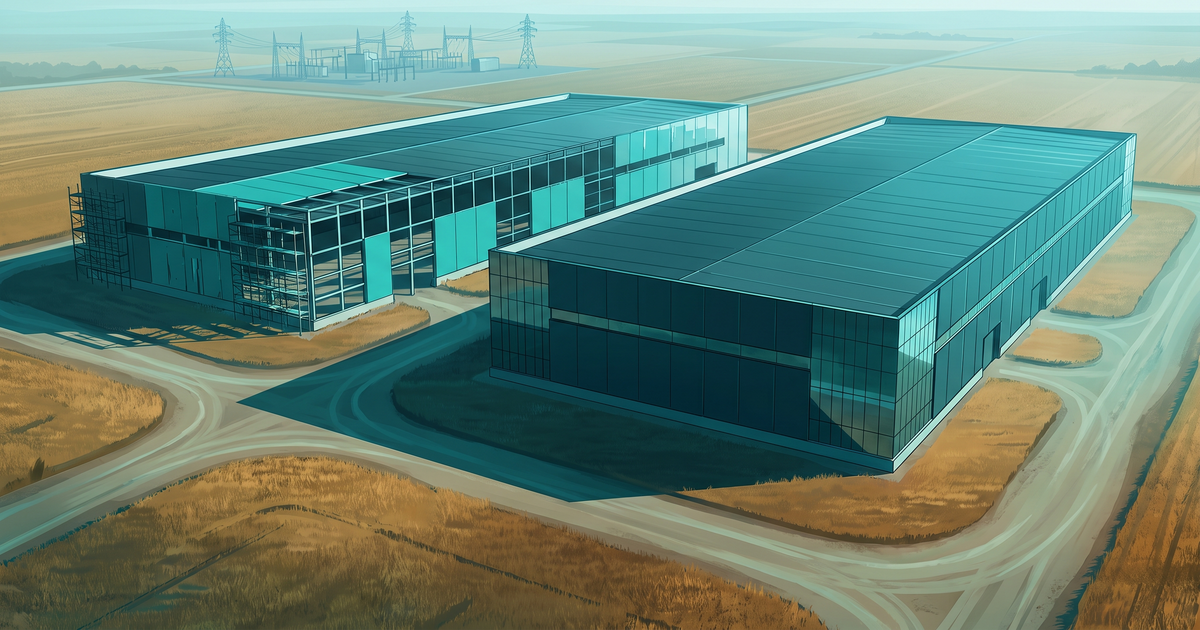
Reporting checked October 1, 2026. Featured and social artwork are AI-generated concept illustrations, not photographs or verified plans of the campus.
Join 35,000+ Low Voltage Pros
Get weekly permit updates, tool deals, job opportunities, and industry news. No spam, unsubscribe anytime.