
Join Low Voltage Nation — Find project opportunities and showcase your company to thousands of industry professionals
Aligned names Holder and Kokosing for Project Phoenix. Read the 2 GW campus plan, job forecasts and prospective low-voltage work in Shippingport.
Aligned Data Centers announced groundbreaking for its 2 GW Project Phoenix campus in Shippingport, Pennsylvania, on September 10, 2026. The owner announcement names Holder Construction and Kokosing as construction partners. For low-voltage firms, those names provide a practical starting point for understanding a major industrial redevelopment in Beaver County.
The commercial opportunity still needs definition. A campus announcement does not identify released fiber packages, security installers, controls integrators or purchasing contacts. The useful next step is to connect the named construction team with current scope documents and procurement instructions. Project Phoenix now has a public construction milestone; contractors still need to establish which portions of the work are available to pursue.
Project Phoenix at a glance
| Item | Reported position | Qualification |
|---|---|---|
| Location | Shippingport, Pennsylvania | Beaver County |
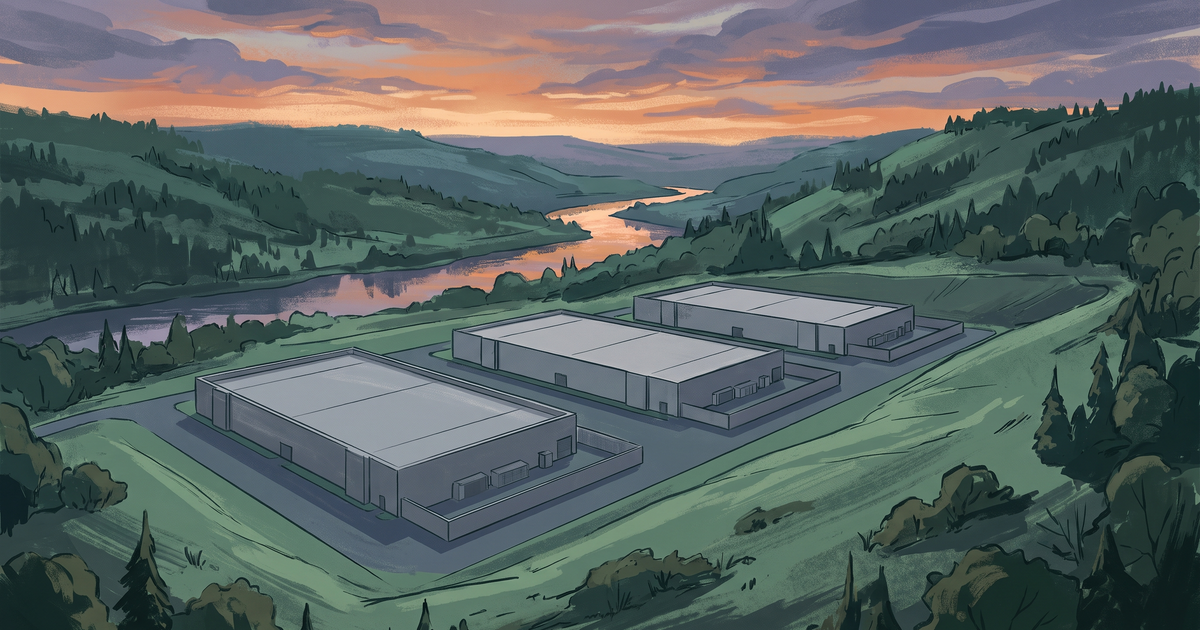
| Campus | Three facilities; 2 GW | Announced capacity |
| Milestone | Groundbreaking announced | September 10, 2026 |
| Builders | Holder and Kokosing | Construction partners |
| Investment | $10B owner headline | Definitions differ |
| Employment | 3,000 construction; 640 ongoing | Owner forecasts |
The dated release supplies the campus scale, milestone and job forecasts above. It does not specify whether the 2 GW figure measures IT critical load or gross demand. First-phase power, customer commitments, operating dates and building-level notices to proceed remain unverified. Groundbreaking establishes the reported milestone; it does not establish that every building has started or that any capacity is energized.
Aligned's Pennsylvania directory lists PIT-01 at 100 Church Lane. That address is useful for locating the campus context. A bidder should obtain current access directions, delivery rules and the work-area plan from the construction team before sending a crew or pricing logistics. A directory address cannot establish a parcel boundary, receiving gate or future data-hall entrance.
How to read the $10 billion headline
The September 10 release describes estimated regional economic investment. Aligned's community page uses capital-investment language for the $10 billion figure. Those descriptions need reconciliation before the headline becomes a construction-cost assumption. Financing close, executed trade-contract values and spending to date are unverified.
Estimators should build a prospective package from quantities and responsibilities. A campus-wide headline does not disclose cable counts, route lengths, rack requirements, device schedules, test criteria or owner-furnished equipment. Applying a low-voltage percentage to that headline would produce a number with weak support. LVN is leaving the low-voltage contract value unspecified until scope evidence becomes available.
A useful early qualification conversation can be narrow: identify the building or phase, identify the buying entity, confirm the release status, and ask which drawings govern pricing. That produces a defensible bid decision. It also protects a small contractor from spending estimating hours on a package that belongs to a different phase or sits inside another subcontractor's responsibilities.
The named team and its role boundaries
| Participant | Supported role | Open question |
|---|---|---|
| Aligned Data Centers | Campus owner/operator | Tenant and phase delivery |
| Holder Construction | Construction partner | Package allocation |
| Kokosing | Construction partner | Package allocation |
| Frontier Group | Adjacent power redevelopment | Campus interfaces |
| Shippingport Power Station LLC | Adjacent generation entity | Separate power schedule |
Aligned's announcement supports Holder and Kokosing's participation without assigning the entire general contract or a specific electrical, civil or low-voltage package to either firm. The adjacent power participants are identified on Frontier's Shippingport Industrial Park page. Their inclusion describes neighboring infrastructure; it does not establish that either entity operates the data centers.
Holder's trade-partner page offers a general prequalification route. Firms can use it to understand the intake process and prepare a current capabilities submission. It is not presented here as an open Phoenix solicitation. Relevant past performance, service territory, available supervision and documentation practices can help a project team evaluate fit when an appropriate package becomes available.
Kokosing's mission-critical page describes construction management, general contracting, civil, mechanical/electrical/plumbing, fabrication and pipeline capabilities. That breadth is company context. Phoenix-specific responsibilities still require project documentation. A contractor should confirm who owns procurement for its trade before treating a corporate capabilities page as a bid invitation.
Campus power and neighboring generation have separate meanings
Aligned's community page describes natural-gas-fed fuel cells and grid independence for two campus buildings. Supply for the third facility, the equipment vendor, permit details and energization sequence remain unverified. These are developer design statements. They do not establish installed equipment, measured emissions or completed commissioning.
Frontier separately describes conversion of the former Bruce Mansfield generating site. Its page uses both 2,550 MW and 2,700 gross MW in different sections. Those figures refer to generation redevelopment. They should not be added to Aligned's 2 GW campus announcement. Frontier's May redevelopment update distinguishes the campus's independent behind-the-meter supply from the neighboring coal-to-gas project.
For controls and communications teams, the practical question is where each system boundary falls. A future scope review should establish who supplies network equipment, who installs field cabling, who owns point naming and who witnesses acceptance. Power-generation monitoring, building controls and tenant IT can have different owners and acceptance procedures. A physical connection between facilities would still need a defined commercial and technical interface.
The same discipline applies to schedule. A target attached to neighboring generation cannot establish a data-hall turnover date. A contractor needs the phase-specific construction sequence, access milestones and testing windows that apply to its own work. Those details control staffing, storage, temporary protection and the order in which completed systems can be handed over.
Where low voltage could enter the work
The following are prospective scope categories inferred from the announced facility type. Public sources reviewed for this article do not establish Phoenix-specific quantities, open packages, awards or bid deadlines.
| Trade | Potential work | Confirm before pricing |
|---|---|---|
| Fiber / outside plant | Entries and campus routes | Paths, carriers, demarcations |
| Structured cabling | Racks, pathways, links | Counts and owner standards |
| Security | Access control and cameras | Device and integration scope |
| Fire alarm | Detection and interfaces | Design and acceptance authority |
| BMS / controls | Monitoring communications | Points and network ownership |
| Commissioning | Testing and turnover records | Witnesses and pass criteria |
Outside-plant firms should examine pathway access and handoffs early. Legacy industrial infrastructure can introduce coordination questions around existing services and work zones. Frontier mentions site fiber, but that does not verify carrier availability or service delivery to a new hall. Route surveys, current utility information and carrier demarcation documents are more useful to pricing than a broad connectivity description.
Inside a building, installation effort depends on the adopted design: cable types, containment, redundancy, termination methods and testing requirements. Security and fire-system teams also need to understand interfaces with doors, mechanical equipment and the responsible acceptance authority. Wireless or distributed antenna work should remain an inquiry until a project requirement identifies it.
Commissioning deserves attention during estimating. A crew can finish pulling cable while turnover remains incomplete because labels, test records or drawings do not match the required format. Prospective bidders should ask how records will be submitted, how deficiencies will be closed and whether retesting or witnessed demonstrations belong in their price. These are practical preparation questions, not disclosed Phoenix contract terms.
Water design still requires controls coordination
Aligned describes air-cooled heat rejection with recirculating cooling water. Its community page acknowledges initial fill, maintenance and domestic consumption. The design claims therefore do not support a zero-total-water statement. The owner is pursuing Green Globes certification; an awarded project certification was not verified.
For prospective controls work, the useful deliverables would be the issued equipment schedules, sequence of operations, communications requirements and responsibility matrix. A sustainability description can explain design intent while leaving installation details unresolved. Ask which equipment arrives with factory controls, which connections belong to the field contractor, and which party is responsible for integrated testing. Those distinctions matter to labor, coordination and closeout.
Jobs, trades and preparation
The dated owner announcement forecasts 3,000 construction jobs and 640 ongoing campus careers. The undated community page still shows 500-plus full-time jobs. Use the dated forecast with its attribution. Neither source establishes today's on-site workforce, open requisitions or a guaranteed hiring allocation for any trade. Neighboring generation-project employment forecasts belong to a separate project.
Holder careers and Kokosing careers are general employment resources. Applicants should verify location and project assignment in the actual posting. The same applies to subcontractors considering staffing: an announced campus workforce is not a schedule of released work.
Technicians can prepare around demonstrable skills. Fiber cleaning, inspection, loss testing, OTDR interpretation and orderly test records are useful topics to review. The Fiber Optic Association technical guide provides reference material, while its workforce resources describe training pathways. These are general preparation resources; Phoenix-specific credentials require confirmation.
For crew leads, preparation includes pathway coordination, grounding and bonding responsibilities, labeling, drawing markups, lift access and site communication. Holder's safety page provides company context. OSHA Outreach Training is a general safety education resource. The employer and site team determine the applicable onboarding and task requirements.
What would make the opportunity actionable?
Watch for issued building permits, a documented phase schedule, package releases and named specialty firms. Electrical, fiber, structured-cabling, security, fire-alarm, controls and commissioning awards would each sharpen the opportunity picture. Fuel-cell procurement and verified utility interfaces would clarify a second set of dependencies. Tenant commitments and initial capacity would help establish what is actually being delivered first.
For a contractor, the immediate commercial test is straightforward: can the responsible buyer identify a released scope, explain qualification requirements and provide the current bid documents? Keep the source date attached to every project claim as that conversation develops. A newly announced milestone is useful intelligence; the right purchasing contact and a defined package make it possible to act.
Explore LVN Signal for construction intelligence and project context. Use this source-linked breakdown to prepare your questions, then confirm current procurement instructions with the responsible project team before committing estimating or field resources.
Reporting checked September 12, 2026. Featured and social graphics are AI-generated editorial illustrations. They do not depict verified site layout, installed equipment or current construction progress.
Join 35,000+ Low Voltage Pros
Get weekly permit updates, tool deals, job opportunities, and industry news. No spam, unsubscribe anytime.