
Join Low Voltage Nation — Find project opportunities and showcase your company to thousands of industry professionals
County records detail Project Matter near Paducah: proposed data-center and generation capacity, named organizations, workforce forecasts and low-voltage scope.
Cottle County's public records put Project Matter at approximately $1.113 billion in anticipated improvements. Aetheris proposes a data center and an independent power facility east of Paducah, Texas. For low-voltage contractors, the most concrete early signals are the developer's plans for security cameras, controlled access, equipment monitoring and leak detection.
The project remains a planned development in this November 10 review. The county scheduled consideration for November 9, but LVN has not verified the hearing's occurrence, a vote result or an executed abatement agreement. Financing, construction mobilization and specialty installation awards also remain unverified. Those distinctions determine whether a contractor should be researching a potential buyer, reviewing an issued package or preparing crews.
What the county notice establishes
The county notice and exhibits name RS 70 Land Holdings, LLC as leaseholder and applicant. Its improvement estimate separates $912 million for data-center buildout from $201.096 million for power production. Equipment and supporting infrastructure are included in the description. Treat the total as a proposed improvement estimate; a construction-only contract price and financial close have not been established.
| Measure | Public disclosure | Qualification |
|---|---|---|
| Location | Cottle County, east of Paducah | Off Highway 70 |
| Data center | 96 MW | IT/gross basis unspecified |
| Power plant | 180 MW proposed | Separate generation figure |
| Improvement estimate | $1.113096 billion | Funding close unverified |
| Current stage | Planned | Start unverified |
The 96 MW label is not defined as critical IT load or gross facility demand. The 180 MW figure describes proposed generation. Adding the figures would produce a misleading capacity claim. Neither establishes energized computing capacity. A future engineering disclosure should identify the load basis, redundancy assumptions, generation configuration and delivery phases before anyone draws conclusions about usable computing capacity.
County action and construction timing need separate evidence
The November 9 Commissioners Court agenda lists a reinvestment-zone hearing, possible action on a zone resolution and possible action on an abatement agreement. An agenda establishes scheduled business. As of this review, LVN has not located minutes or a signed agreement establishing the outcome in the retrieved county agenda index.
The developer's project FAQ forecasts a fall 2026 construction start and approximately 18 months of work. That guidance remains a forecast. Dated site evidence, permits and a construction notice would help establish the physical phase. A tax arrangement, an equipment order and a notice to proceed each answer different questions about delivery readiness.
For a small contractor, the practical response is to preserve a clear qualification checklist. Confirm the contracting entity, procurement contact, package release date, insurance requirements and payment terms before investing in detailed takeoffs. Rural mobilization also makes travel, accommodation, material staging and service-response obligations important commercial questions. None of those requirements has been verified for Project Matter.
Who is named, and who remains unknown
Aetheris describes an integrated power and data-center development business. Its community letters connect the team to Project Matter and RS 70 Land Holdings. The county parcel exhibit separately identifies the landowners. These roles matter because land ownership, project development and purchasing authority can sit with different organizations.
| Organization | Supported role | Evidence |
|---|---|---|
| Aetheris | Developer/operator | Signed community letter |
| RS 70 Land Holdings, LLC | Leaseholder/applicant | County notice |
| Farmland Reserve Inc | Landowner | County parcel exhibit |
| Paducah 324, LLC | Landowner | County parcel exhibit |
| Cottle County | Public authority | Notice and agenda |
| GC/EPC and specialty trades | Unknown | No verified award |
The county exhibit covers a broader parcel and reinvestment-zone context, including phase labels and a map exclusion. It does not establish a surveyed construction footprint. An exact entrance or campus location should come from an issued site plan. The current Signal map point is a Paducah city fallback and should not be used for site navigation.
No general contractor, electrical contractor, low-voltage installer, architect or engineering award was established in this review. The customer remains confidential in the developer's FAQ. Aetheris's AI infrastructure positioning does not identify the facility's customer, workload or an executed GPU contract. Prospective suppliers should avoid treating any landowner or publicly named organization as the confirmed buyer of their package.
Where low voltage appears in the disclosed plan
The October 26 technical letter describes infrared cameras, controlled access and equipment controls. It also describes leak detection and monitoring. Those disclosures support specific systems to investigate. They do not establish camera counts, door schedules, network architecture, manufacturers or installation contracts.
| System | Potential work | Evidence boundary |
|---|---|---|
| Cameras and access | Perimeter and entry integration | Developer describes systems |
| Controls and monitoring | Alarms and equipment interfaces | Developer describes functions |
| Fiber and outside plant | Routes, entrances and testing | Prospective analysis |
| Structured cabling | Pathways, termination and labels | Prospective analysis |
| Fire alarm | Life-safety coordination | Design and award unknown |
| Networks and commissioning | Handoffs and acceptance records | Package boundaries unknown |
For security integrators, early questions include who owns the camera network, where access decisions are managed and how power outages affect doors and recording. A perimeter concept also needs practical coordination among civil work, poles, pathways, communications and maintenance access. These are procurement questions to resolve when drawings become available, rather than claimed requirements for this campus.
For cabling and outside-plant teams, the useful preparation is a documented process for route surveys, entrance coordination, fiber handling and acceptance testing. Carrier paths, duct banks, splice points and building entrances must be reconciled with issued civil and electrical plans. No carrier, diverse route or fiber package is named in the reviewed material. A large generation figure cannot be converted into a cable quantity or a low-voltage contract value.
Controls work needs equally careful boundaries. A campus can have equipment supplied with factory controls, an integration layer and separate operational networks. Before pricing, identify responsibility for field devices, network switches, software configuration, alarms, testing and turnover. The buyer's approved sequence of operations and acceptance criteria should drive that scope. Project Matter has not disclosed those detailed documents in the reviewed sources.
Power and water claims deserve close reading
The October 26 letter proposes natural-gas generation, battery storage and an on-site substation, with solar to be evaluated. It describes liquid cooling with air-cooled chillers. Equipment suppliers, battery capacity, permits and actual performance remain unverified.
The same letter separates a roughly 400,000-gallon initial cooling fill, estimated annual cooling makeup of 20,000–25,000 gallons and approximately 540,000 gallons of annual potable use. Those figures have different time bases and uses. The October 19 letter describes bringing water from outside Cottle County during construction, startup and initial operations, with future local groundwater use conditional on an approved regional plan.
The website FAQ still says on-site water only and roughly 500,000 gallons of annual use. That wording conflicts with the dated letters' supply description and breakdown. Readers should retain the conflict instead of presenting a single settled water figure. Independent supply arrangements and environmental approvals would provide stronger evidence than a promotional comparison. Controls contractors would eventually need actual metering, alarm and reporting requirements from the design team.
Jobs, transferable skills and vendor access
The November 2 workforce letter forecasts 40–50 full-time and part-time positions combined for initial operations. That differs from the FAQ's 40–50 full-time wording. The FAQ's separate 600–800 construction-job figure is also a forecast. LVN has not verified vacancies or a current hiring schedule.
The letter proposes paid training, certification support and free OSHA 10/30 training for county residents under the proposed abatement arrangement. It discusses potential pathways from maintenance, electrical work, cooling, IT and logistics experience. Those examples do not establish open positions, a training enrollment window or guaranteed placement.
For technicians preparing for future opportunities, useful skills include fiber cleaning and testing, consistent labeling, pathway coordination, security integration, controls networking, grounding and bonding coordination, and accurate commissioning records. A strong portfolio can show anonymized test results, clean as-built documentation and examples of resolving installation defects. These are general preparation suggestions; Project Matter's hiring and subcontractor qualifications remain to be published.
The Fiber Optic Association's workforce resources provide general fiber-training information. OSHA's Outreach Training Program explains hazard-awareness education; outreach courses do not replace task-specific employer training. Neither resource is presented here as a confirmed Project Matter partner or mandatory campus credential.
The November 2 letter directs interested businesses to info@projectmatter.net. Treat that as a public inquiry route. It does not establish an open tender or qualification approval. A useful supplier introduction would identify service territory, relevant work, available capacity and the specific procurement information needed. Confirm the purchasing team and issued scope before quoting.
The milestones that would change the opportunity
The next meaningful evidence would be a documented county outcome, an executed agreement, permits, a financing milestone, a named delivery team and dated construction activity. For specialty trades, an issued package and identified buyer would make the opportunity materially more actionable. A coherent scope should connect drawings, schedules, quantities, responsibilities and acceptance requirements.
Project Matter warrants attention because its public documents connect a substantial development proposal with concrete security, controls and workforce intentions. The work still requires qualification. Use LVN Signal to follow construction projects, named organizations and low-voltage opportunities, then validate the current procurement position with the responsible project team.
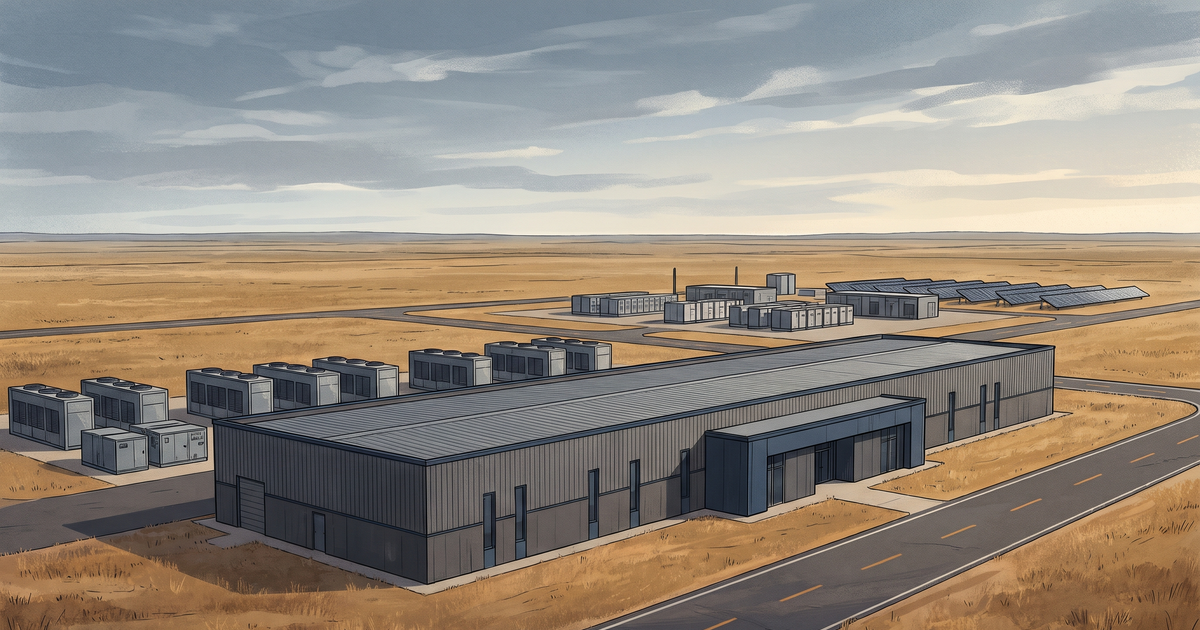
Reporting reviewed November 10, 2026. Featured and social images are AI-generated concept illustrations. They do not show an approved site plan, installed equipment or verified construction progress.
Join 35,000+ Low Voltage Pros
Get weekly permit updates, tool deals, job opportunities, and industry news. No spam, unsubscribe anytime.